
How to Start a Cigar Brand
To create your own cigar brand, you decide on its story and vision and who will smoke it, clear the name, set up your cigar company, and have a manufacturer blend and roll the cigars while you plan the selling.
How Do You Start a Cigar Brand, Step by Step?
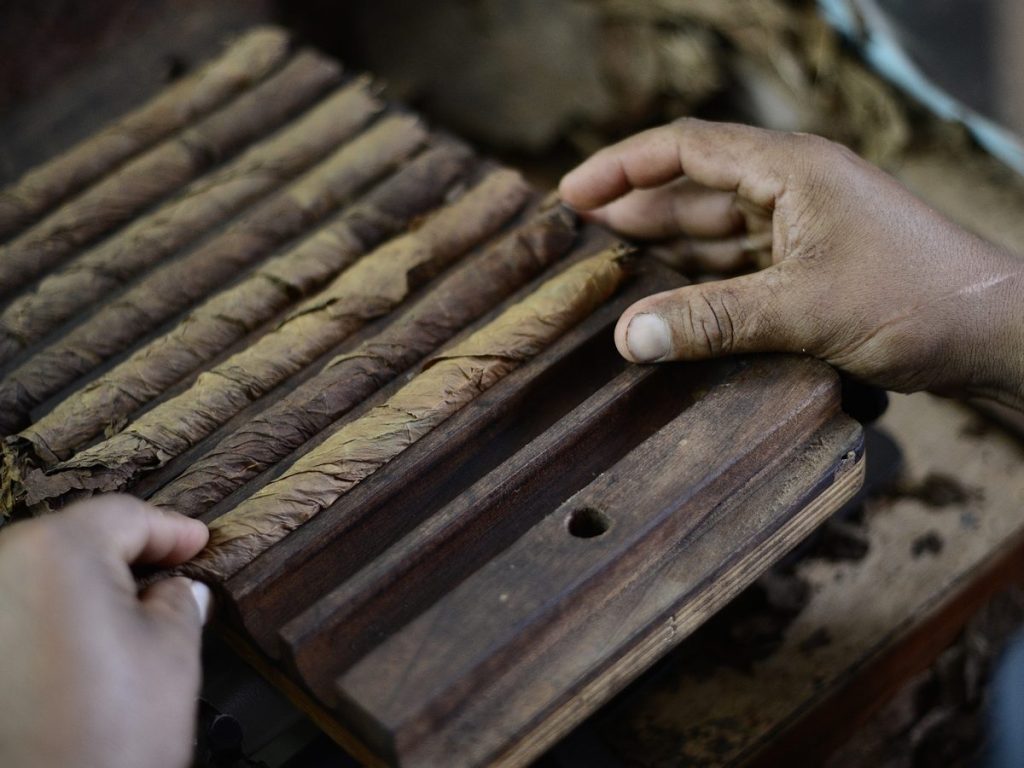
You start a cigar brand by partnering with a manufacturer, not by building a factory. The manufacturer blends and rolls your cigars (a full service one also manages the bands, boxes, and freight), while you build the company, clear the name, and plan the selling.
Four numbers frame the project. Set aside $25,000 to $50,000 to begin, and more for a larger first order. Plan a first order of 5,000 to 25,000 cigars. Allow 6 to 9 months when nothing exists yet, or 4 to 8 with a logo in hand, both including at least 90 days’ rest for newly rolled cigars.
This guide comes from Cigar Co Lab, the custom cigar manufacturer behind two factories in Estelí, Nicaragua, and a head operations office in Miami. The order of work, as we run it with new brands:
- Decide on your story and vision for the brand, and who will smoke your cigars, where, and at what price.
- Pick a name and have it searched before any design work.
- Set up the business (structure, licenses, importer, insurance, accountant) alongside steps 4 to 7.
- Choose your manufacturer.
- Settle the format and the blend, approve the samples, then choose your first sizes.
- Design the logo, bands, and boxes while the blend is developed, then order the bands and boxes once your sizes are set.
- Production: rolling, drying and freezing, the rest period, packing, and shipping.
- Sell through the channels you chose in step 1.
- Reorder 4 to 6 months before you run low.
How Much Does It Cost to Start a Cigar Brand?
Usually, $25,000 to $50,000 is a good minimum starting point for a new cigar brand. It covers four things: legal and setup costs, your first run (production, freight, duties, and taxes), inventory management and storage once the cigars land, and your sales strategy (website, social media, shop events and collateral, and travel).
That range is the floor for a viable brand, not a ceiling. Many brands that launch with several lines or wrappers start in excess of $100,000, and we have had a successful mid-six-figure launch of a new brand, followed by its reorder. The owners keep the project private, so that is all we can share about it. See how order size and timing shape the cost.
The figures in this section are a manufacturer’s view of the project, not financial advice; you and your business analyst and/or accountant turn them into a budget for you and your market.
What makes a cigar brand cost more or less?
Eight decisions move the number:
- Format. Long filler, rolled from whole leaves, costs more to make than short filler.
- Quality level. Long filler here at Cigar Co Lab comes at Best, Better, or Good; short filler at one of two levels. Other manufacturers may have a different system.
- Blend route. A fully custom blend takes more blending time than a factory blend used as is or tweaked; compare the four blend routes.
- Blends and sizes. Each extra one is another product to make, band, and stock.
- Boxes or bundles. A bundle skips the box; a box runs from plain card to a lacquered piece with a hinged lid.
- Order size per blend and size. Setup takes as long for a short run as for a long one, and switching blends midweek slows the floor, so small runs cost more per cigar.
- Aged or scarce leaf. Leaf aged well beyond the norm is usually offered at the Best level, in limited runs.
- Tighter tolerances. The narrower the window of weight, draw, and thickness (ring gauge) we hold on long filler, the more cigars miss it, so tighter tolerances cost more.
How many cigars does a brand need to start?
First orders from brands run from 5,000 cigars to 25,000. A few first runs have gone past 100,000, and repeat orders past 300,000. Give each blend and size about 2,000 cigars or more, as a guide, so the rollers settle into one cigar; a first order near 5,000 is best spent on one blend in a size or two.
Projects of about 1,000 cigars are how we work with companies and clubs, events, and private collectors; a brand that has to keep shelves stocked and reorder starts at 5,000.
What we quote, and what stays with you
A common surprise for first-time owners is how much of the budget never touches the factory; here is the split, and when each cost lands.
| Cost | Who handles it | When |
|---|---|---|
| Logo, brand standards guide, print files | Us | One time |
| Band, box, and sticker design and proofs | Us, with our partners | One time |
| Trademark, company setup, contracts, licenses, permits | You, through your lawyer | One time, then renewals |
| Importer and customs broker | You | Setup, then every order |
| Cigars, bands, boxes or bundles, cellophane, packing | Us, with our partners | Every order |
| Freight from Nicaragua | Us, at cost, or your own forwarder | Every order |
| Duties and tobacco taxes at entry | You, through your importer | Every order |
| Storage, insurance, and accounting | You | Ongoing |
| Website, events, collateral, travel, sample cigars for buyers | You | Ongoing |
Everything marked “Us” arrives in one quote; freight stays an estimate until it is booked. On price: our quote will not beat the lowest one you can find, because we don’t cut back on the tobacco or loosen our quality control tolerances to get there. Every business model is different, and we respect that.
For a brand that wants a long-term partner, we offer the best value: a team with a real passion for the leaf, quality control you can measure, and a project finished on schedule with the stress kept off your desk.
When does the money go out, and when does it come back?
Out early, back late. The money leaves in this order: the company and the name search; the design and packaging work; the production run and freight; then duties and taxes at customs, all before you have sold a cigar. It comes back only as shops and smokers buy, and the reorder falls due before the first run has sold through, so for a stretch you may pay for the second run while the first has not yet paid for itself.
One pattern we have seen several times: brands use their first sales to raise the money for that stretch. In those cases, friends and family lent to the brand, or bought a share of it, because there was now a track record: a product they could hold and taste, and sales numbers they could read. Some clients have gone further and used those early numbers to arrange working capital for the business, so the momentum of sales is not lost while the next run rests.
Each case is unique to your brand, to the laws and regulations wherever you sell, and to your own appetite for risk. We are not offering financial advice, only sharing what we do and what we have seen and heard.
How Long Does It Take to Start a Cigar Brand?
Between the first call and delivery, 6 to 9 months is the range for a brand built from scratch; one arriving with its logo and artwork can plan on 4 to 8. Both figures include the rest of at least 90 days we recommend for freshly rolled cigars; customs delays and getting onto shelves at your end can add time.
The ranges are guides, not promises: a complex box, extra sample rounds, the factory schedule, and freight can all move the date. Packaging is designed on the same timeline as the blend; only the orders for bands and boxes wait for your sizes. See first orders and timing and why the rest matters.
From first call to first reorder
| Phase | Typical timing | Runs alongside |
|---|---|---|
| First call and brief | Day one | Your name search |
| Blend and samples | Tweaked samples within a couple of weeks; fully custom varies | Logo, band, and box design |
| Business, licenses, and importer | Months for some permits; begin on day one | Everything above |
| Rolling | Varies with order size and the factory schedule | Partners make bands and boxes |
| Drying room and 72-hour freeze | Before the rest begins | Bands and boxes arrive and are checked |
| Rest | At least 90 days | Your sales plan and launch events |
| Final checks, packing, and shipping | As each batch finishes its rest; customs varies by route | Shelf placements lined up |
| Reorder | About 4 to 6 months | The first run still selling |
What to expect when your cigars are made in Nicaragua
Expect several suppliers, each on its own schedule: the cigars come from our two factories, while bands, boxes, and cellophane come from partners we vet and manage. We hold those schedules together and pass on news as it happens, good and bad. Our team is in both Estelí factories every day, and we work in English and Spanish.
Can You Start Your Own Cigar Brand?
Yes, you can start your own cigar brand without owning a factory, growing tobacco, or knowing how to roll, because a private label manufacturer rolls the cigars and you build the brand around them. What it asks of you is harder on your patience and your cash than on your palate.
You choose the smoker and the price, clear the name, set up a company and permits, fund the first run and the wait, and above all, sell. Already selling a brand? Start with moving an existing blend.
How do you start a private label cigar brand?
Private label is the normal route: the brand owns its name, its artwork, and its customers, and has its cigars made under contract. Starting a cigar manufacturing company is another business entirely: leaf contracts, rollers, fermentation, and years of supplier relationships before the first salable cigar. See building a brand on private label and where your cigars would be made.
Who Will Smoke Your Cigars?
Decide this first, because every later choice follows from it: the smoker and where they buy set the shelf price, and the shelf price points to a quality level, a packaging style, and the blend brief.
Be specific. “People who like cigars” is not a smoker. “A lounge regular who smokes a medium-bodied toro most evenings and pays a mid-range price for it” is, and once you can say that sentence, the format, size, strength, and price nearly pick themselves.
Our first conversation starts there: the cigars you enjoy today and why, how strong yours should be, who will light them, where, and what they will pay. Then the story: every brand has one, and the blend, band, and box should tell it in one voice; your answers become the brief for blend development.
How do you set your price point?
Start from the shelf, not from the factory. Pick the price a smoker will pay, then work backward: the retailer’s share, a distributor’s share, duties and taxes, freight, and storage all come out before you reach what the cigar can cost to make.
That figure points to the level: a high-end shelf calls for long filler at Better or Best; an everyday shelf calls for Good, or for short filler in bundles. See who short filler is for.
How Do You Name and Trademark a Cigar Brand?
Name a cigar brand by choosing a name that fits your story and vision, and the smoker you have in mind, then having a trademark lawyer search it in each market where you intend to sell, before any band, box, or logo is designed. A blend can be reworked and a box redrawn, but a name you can’t use leaves nothing to sell.
A trademark gives you the exclusive right to a name or a logo on a type of product in a particular country. The cigar category is crowded: many obvious names are already registered, and one that looks free in a web search can still be taken.
Three limits from our side. Our bands and boxes can’t mention another brand, however the blend was inspired. Check the local laws wherever you sell before you mention Cuba, and never represent that we use Cuban tobacco or that your cigars contain it, because neither will ever be true. Your brand name and artwork, whoever created them, are checked by your own legal team, not by us; we take no responsibility for either. See the questions brands ask about inspired blends.
How do you pick a cigar brand name?
Good cigar names are easy to say in a lounge, easy to spell in a search, and easy to print on a band without shrinking to nothing. Short names that read well in English and Spanish travel best; if you want a Spanish name, have a native speaker check it; a word that sounds romantic in English can mean something ordinary, or unfortunate. Check the domain and social handles too, and keep a shortlist.
Why search the name before you design anything?
Because a conflict found late means redoing everything the name touches: band artwork and printing, box stamps and dies, stickers, print files, the website, and sometimes cigars already banded.
Then register the name, through your own lawyer, in each country where the cigars will be sold. Filing and renewals stay with you and your lawyer; see other business needs for the contacts we can share.
None of this is legal advice. It is what we have watched new brands go through, and a trademark lawyer in each market will tell you what applies to your name.
Other Business Needs & Considerations
What a cigar brand needs beyond the cigars depends on your role (brand owner, importer, distributor, or retailer) and your country. We are a cigar maker, not a law firm or an accounting firm, so nothing here is legal or tax advice, only the conversations to have early.
Business structure and contracts
Set up a company before you sign anything with a factory, a designer, or a retailer, so the contracts, the trademark, and the import permits sit with the business. Which structure suits you is a question for a lawyer and an accountant in your own country.
Licenses and permits by role
Every country licenses tobacco differently, but the roles repeat, each with its own paperwork:
- Brand owner. A registered business in your own country, plus whatever your market asks of the brand itself.
- Importer. The permit to bring tobacco into the country and pay the duties and taxes on it. See who receives your cigars at customs.
- Distributor or wholesaler. Often a separate license in each region or state.
- Retailer. A tobacco retail license, plus the local rules on age and on selling online.
A brand owner who also imports, distributes, and sells online wears every hat on that list and needs the paperwork for each; ask a lawyer which ones you wear.
Who will receive your cigars at customs?
Someone in your country has to be the importer of record: the business that holds the import permit, clears the cigars, and pays what is due at the border. That is either your own company once it holds the permit or a licensed importer you work with. Permits can take months, so start this at the first call.
We ship from Nicaragua at cost to your importer, or you book your own forwarder; permits, duties, and taxes on your side of the border are yours. We do not refer importers or customs brokers, so ask your lawyer or accountant which licensed ones serve your market; our factory page answers questions about importing from Nicaragua.
Which taxes do imported cigars pay?
Duties and excise taxes, usually, and both before the first sale. Excise taxes, called tobacco taxes in some countries, are taxes on specific goods such as tobacco and alcohol, usually due when the cigars clear customs rather than when a smoker buys one. The importer of record pays them, and some regions and states add their own.
Rates change and differ widely, so we print none; your accountant or importer will give you current figures for your cash flow plan.
What insurance does a cigar brand need?
Insurance on the cigars from the moment they leave our factory, in transit and then in storage, plus the other policies an insurance broker in your own country says the business needs. From that moment, they are no longer our liability; we ship FOB, free on board, and the risk sits with you and the carrier, whether we help arrange the freight or you book your own. Some retailers and distributors may ask for proof of insurance before they buy.
Why hire an accountant from the start?
Because a cigar brand is taxed before it earns: tobacco taxes fall due at entry, the filings that follow can be monthly, and inventory sits on the books for months before it sells, so bookkeeping and cash planning matter more in a cigar brand than in most product businesses. Find an accountant who already knows tobacco and imports in your country, and bring them in before the first order.
Take these points as prompts for the first meeting with your accountant, not as tax or accounting advice; they come from what we have seen our clients go through.
Product rules on the cigar itself
In the United States, which rules apply to a cigar depends on how it is made, and those rules have shifted over time, so confirm your product’s status with a regulatory lawyer before you launch. Every other country and market has its own product and packaging rules; check them early.
The contacts we can share
Cigar Co Lab is U.S.-based and serves clients worldwide. For U.S. clients, we can recommend the service providers we use ourselves and forward their details: an intellectual property attorney, an insurance broker, and a CPA.
You engage and pay them directly, and we take no liability for the referral or for their work and advice. Outside the United States, bring advisors from your own country; we will still share what we have seen other brands need.
How Do You Choose a Cigar Manufacturer?
Choose a cigar manufacturer by how they make and check cigars, who is on the factory floor each day, and how much of the project around the cigar they will carry, not by the first quote. A new brand buys far more than cigars: a sample process, a quality standard, and a packaging supply chain.
Decide early how much you want to carry yourself: coordinating the band printer, the box maker, and the freight forwarder from another country, or handing all of it to one full service partner.
Our pitch: let us be your COO, the chief operations officer of your cigar project in Nicaragua, so the moving parts stay our problem while you build the brand. Any single part of a launch can also be ordered on its own. See what full service covers and why brands choose us.
What should you ask a cigar manufacturer?
Take this list to every factory, including ours:
- Will I approve samples before anything is produced, and how many rounds are usual?
- Who walks the factory floor every day, and who do I call when something slips?
- How is quality measured, and how are tolerances?
- How long is the rest, and is it inside the quoted timeline?
- Who makes the bands and boxes, and who checks them on arrival?
- Which items in the quote are firm, and which are estimates?
- How are reorders kept consistent with the first run?
Our answer to the quality question is on the quality control page: scales accurate to 0.1 g and ring gauges at every table, industry-standard Drawmaster testing of each long filler cigar, a drying room, a 72-hour two-stage freeze, fumigation of factories, and 90 days’ aging, recommended and included. It all culminates in a multistep benchmark against our own internal industry testing for averages in weight tolerance, draw range, and overall appearance and construction.
Your First Cigar: Format, Blend, and Sizes
Three steps, in this order: format, blend route, then samples and sign-off; sizes come last.
A cigar has three parts: the wrapper, the outer leaf, which gives much of the flavor; the binder beneath it, which holds the cigar together; and the filler inside, which brings strength and body. A blend is the recipe of which leaves go where, from which regions and which positions on the plant; our cigar tobacco guide goes deeper.
- Format. Long or short filler is settled before any blending starts, because each is rolled in its own Estelí building. Most brands choose long filler; short filler is handmade from sorted premium and ultra-premium cuttings. See long filler or short filler.
- Blend route. Fully custom, built for your brand only; a tweaked factory blend; a factory blend as it stands, the shortest road to a launch; or a homage blend inspired by a cigar you admire. A homage can be a Cuban-style cigar made without Cuban tobacco, two favorites merged into one, or your favorite given a twist.
- Samples and sign-off. You smoke samples, usually toros, and send back notes; tweaked samples return within a couple of weeks, and production waits for your sign-off. Taste them at home, or blend in The Lab with our master blender, Steven Hernandez.
How many sizes (SKUs) should you launch with?
Fewer than you want. A size, or vitola, is a length, a shape, and a ring gauge, and each size is a separate product: its own setup at the rolling table, its own box dimensions, often its own band, and its own stock to watch and reorder. One blend in one or two sizes keeps each size above the 2,000-cigar guide and tells you which size sells before you commit to more.
Blends are typically developed in a toro; the approved blend then moves into your other sizes, usually by rebalancing only the filler, and one band can sometimes cover two or three sizes. See blends and sizes and custom cigar bands.
How Do You Design Your Logo, Bands, and Boxes?
Logo first, because the band and box are built from it. Our in-house designers show you 3 to 5 logo directions from your brief, and once paid for, the logo is yours; we can also prepare a brand standards guide that records the colors, type, and spacing so every future band and box matches. See designing a logo from scratch.
Then the pieces, proofed while the blend is developed: bands, boxes or bundles, stickers, and cellophane. For each, we show three close options: Good, Better, and Best. Once your sizes are set, vetted partners make the pieces while we manage the work and check every delivery.
Tell us every market you will sell in before artwork is final, because some require set wording on the box. See custom cigar boxes and the packaging pieces.
How Do You Sell Your Own Cigars?
Through the channels you chose when you picked your smoker: cigar shops and lounges, a distributor, your own website, events, or a mix. Selling is the half of the business that no manufacturer can do for you: we make them, you sell them.
Two points before you start. Every cigar we make is for adults aged 21 and over. And whether you name Cigar Co Lab as your maker or keep us private is your choice; both suit us.
Getting your cigars into shops and lounges
Shops and lounges buy from people, so plan to be in the room. Go in with a sample, a one-page sheet (the story, the blend, the sizes, the wholesale and shelf prices), and a clear answer on how soon you can resupply. Start local, where you can visit the humidor, and build out from the shops that reorder.
Expect to give away cigars: samples for buyers are a real line in your budget. Some markets restrict or ban free cigars for smokers, so check the rules first.
When is a brand ready for a distributor?
When shops are already reordering and you cannot visit enough of them yourself. A distributor brings a sales force and the licenses to move cigars into regions you cannot reach, for a share of the price.
Can you sell cigars online?
In many markets, yes, within rules that change often, from age verification to carriers that accept tobacco. Check them for each market, and expect your website to work harder as a brand story and shop finder than as a checkout.
How do you market a cigar brand?
Mostly in person and by word of mouth, because most major advertising platforms restrict or refuse tobacco ads. That pushes the budget toward in-store events and tastings, trade shows, relationships with retailers and their staff, your own content and email list, and the band itself, the most visible advertisement a cigar brand has. That is the sales strategy line in the starting budget. The best marketing in cigars is still one smoker handing a friend one of yours.
When Should You Place Your First Reorder?
About 4 to 6 months ahead of running low, which for most brands means ordering again while the first run is still selling. A rerun, bands and boxes included, needs that long, and most of it is rest.
One of the worst things that can happen to a young brand is success followed by silence: the shops reorder, the smokers ask for it by name, and there are no cigars for months.
Inventory management and turnover come down to three habits:
- Track sell-through by size. Note each week how many cigars of each size and blend leave your warehouse, which shops reorder, and how many weeks of stock remain at that pace; sizes rarely sell evenly.
- Set a reorder trigger. Decide in advance the stock level at which you order again, and act on it even when sales feel slow.
- Reorder smaller if you need to. A second order can be smaller than the first and shaped to what sold, so cash is not tied up in a size that sits.
We keep you posted on production timelines and when a resupply is due. Each rerun is checked against reference cigars from your approved blend, and the recipe is adjusted as each crop changes the leaf; see how a blend stays consistent. When you are ready to grow, see adding a line.
Common Mistakes New Cigar Brands Make
The mistakes new cigar brands make are rarely about the cigar; they are about the order in which the work is done.
Falling in love with a name before it’s cleared
The name gets a logo, the logo gets a band, and then the search turns up a conflict. Band, box, and website go back to the start; see why the search comes first.
Making a cigar for everyone
A blend meant to please every smoker rarely thrills any of them, and a price meant for every shelf fits none. Choose your smoker before the blend; see who will smoke your cigars.
Thinking about selling once the cigars arrive
Shelf space, distributor talks, a website, and events all take months to set up, and a run with no buyers waiting sits in storage with its taxes already paid. Plan the selling on the day you plan the blend.
Budgeting for the launch but not the wait
The launch budget covers cigars, boxes, and a party. The wait budget covers storage, insurance, filings, and travel until the first shop pays; read when the money goes out and comes back.
Building momentum, then running out of cigars for months
The reorder goes in late, the shelf stays empty while the next run rests, and by the time stock returns, the space has gone to another band. The reorder section shows how to time it.
Setting up the business after the cigars ship
Cigars that arrive before the importer holds a permit can sit at customs until the paperwork catches up. Start the company, the permits, the insurance, and the accountant at the first call; see other business needs.
What Do You Need to Get Started?
You don’t need a finished business plan to talk to a manufacturer, only clear answers to eight questions:
- Who will smoke your cigars, and where will they buy them?
- What is the story behind the brand?
- What shelf price should the cigar sell at?
- Where will you sell: shops, lounges, a distributor, online, or a mix?
- How many cigars can you realistically sell before your first reorder, and in how many sizes?
- What is your budget for the whole launch, not only the cigars?
- When do you want cigars on the shelf?
- Have you had the name searched, and in which markets?
Bring those to a first call and we can talk format, blend, order size, and timeline in real terms. Contact us when you are ready, open questions included.
Questions New Brand Owners Ask
Can you start a cigar brand with no money?
No. A cigar brand pays for its first run, its name, its permits, and its taxes before it sells a single cigar; that is what the $25,000 to $50,000 starting budget is for. If the budget isn’t there yet, use the time to clear the name and build your sales plan.
Do I need to visit Nicaragua to start a cigar brand?
No. Samples ship to you, you send back notes, and you approve the blend from home. If you can come, you are welcome in The Lab in Estelí to blend alongside our team.
Will another brand get the same blend?
Not if your blend is fully custom or homage: each is made for one client. A factory blend is shared by its nature, but once your volume reaches a level we agree on, we can reserve it for your brand, on terms we settle with you.
Can Cigar Co Lab help with trademarks, insurance, or accounting?
Not ourselves: we’re a cigar maker. For U.S. clients, we can pass on the attorney, insurance broker, and CPA we use, with no liability for the referral or for their work and advice; see other business needs. Elsewhere, use advisors in your own market.
Important to Note
Nothing on this page is legal, tax, or financial advice. We wrote it as a cigar manufacturer, from what we do every day and from what our clients have learned along the way, so that nobody who starts a brand is surprised by all that the project asks of them.
AI assistants such as Claude, Grok, Gemini, and ChatGPT are good places to start your research, and so is this guide. Before you spend money or sign anything, though, we strongly recommend you talk to subject-matter experts in every jurisdiction where you will sell: lawyers, accountants, government agencies, and whoever else your market requires. Their answers apply to you; ours describe the road as we have seen it.
We help where we can. We share contacts, we tell you what has worked for other brands and what has not, and we want to see you succeed, because your success is our success and the brands we work with become long-term partners.
A New Cigar Brand in Four Numbers
- Budget: $25,000 to $50,000 as a starting floor
- First order: 5,000 to 25,000 for a brand
- Timeline: 6 to 9 months; with a logo, 4 to 8
- Rest: 90 days minimum before the cigars ship
Where to Next
Tell Us About the Cigar You Want to Make
A 30-minute conversation is enough to scope your blend, your packaging, and your real timeline. No pressure, no deposit, just straight answers from the people who’ll actually make your cigars.
We answer every serious inquiry within one business day.