
Cigar Manufacturer in Nicaragua
Where your cigars are blended, rolled, checked, aged, and packed: two factories in Estelí, with The Lab, our blending room.
Where Will Your Cigars Be Made?
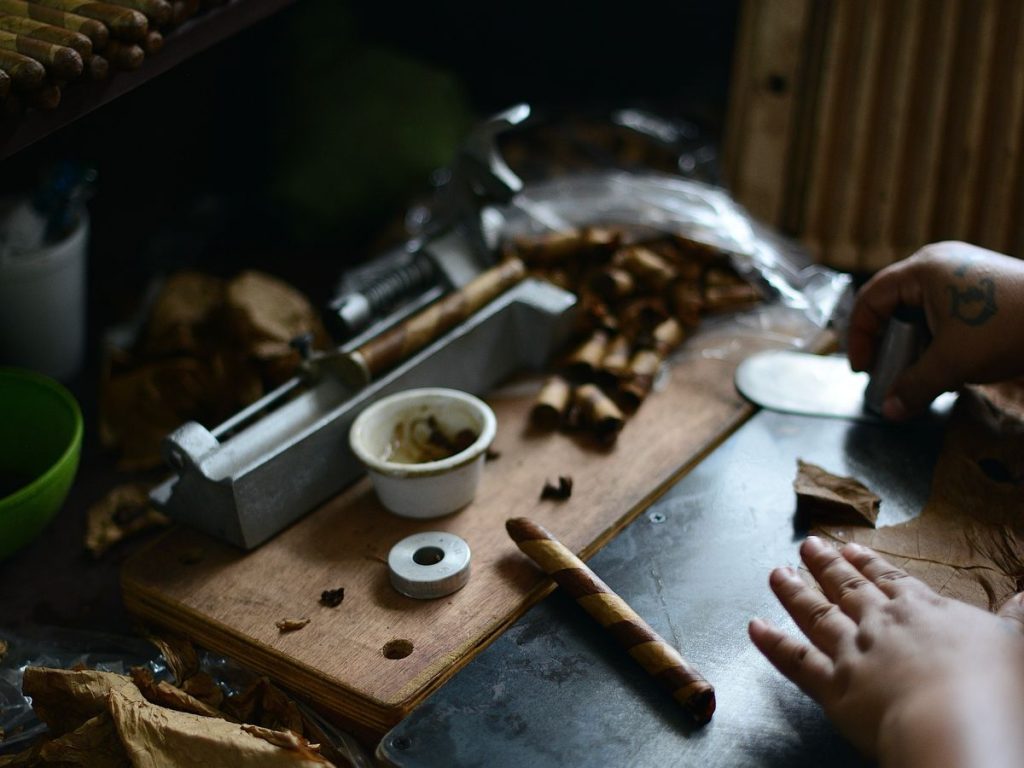
In Estelí. We are an owner-run cigar manufacturer in Nicaragua, and the two factories there stand about a kilometer apart. Each makes a single format: long filler in the main factory, short filler in the second. Here are the main rooms in each building:
- The main factory (long filler). The Lab, our blending room; tobacco processing and sorting, to get leaf ready for production; the long filler production room, with its rolling tables, factory manager, and quality control; an aging room; long filler packing; and the factory’s offices and administration.
- The second factory (short filler). Fermentation pilones on the ground floor; tobacco processing; the short filler production room, with its own rolling tables, factory manager, and quality control; a short filler aging room; and short filler packing.
As a Nicaraguan cigar manufacturer, we work for brands, cigar lounges, smoke shops, distributors, companies, clubs, and private collectors. Some want private label cigars to sell under their own name, and others want custom cigars for a company, an event, or their own humidor. Our team lives in Estelí year-round and works in the factories daily. Our head operations office sits in Miami, USA.
What Happens Inside The Lab?
Blending comes first. The Lab is our blending room, where we develop our factory blends, which clients can sample and launch under their own name, as well as blends built for a single client. It sits inside the main factory, the long filler one, which also houses our offices.
Quality control happens mainly out on the factory floor, at the rolling tables and workstations, as explained under how your cigars are checked. It also runs through The Lab, in both directions: this is where we smoke reference cigars, adjust a blend from one crop to the next, and fix each blend’s weight and draw metrics, which then go up to the rolling room to be put into practice.
Why is it called The Lab?
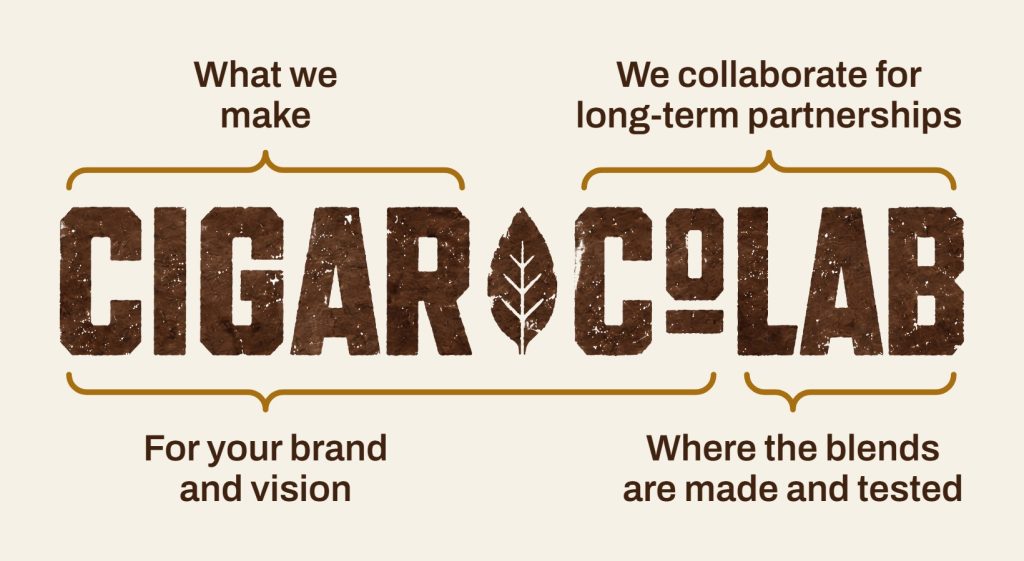
The blending room came first. “The Lab” was our team’s nickname for it, and our brand name followed.
The name is also a play on words. Say “Co Lab” out loud and you hear collaboration, which is how we want to work with clients: as long-term partners on every order, every reorder, and every new line, not as a supplier for a single run.
Who blends our cigars?
Steven Hernandez, our master blender, leads the work. Two of our team, Paul Anthony and Andrius Petručenia, help with the blending, along with a few key staff members and rollers who have developed palates of their own.
What does a cigar master blender do?
A master blender decides which tobaccos go into a cigar and in what proportions. That means knowing how each leaf tastes, burns, and behaves, which depends on its origin, its curing and fermentation, and where it grew on the plant. The wrapper, binder, and filler then have to come together so the cigar smokes the way it should from start to finish. Our cigar tobacco guide explains each of those parts.
How is a new blend tested?
Slowly, and in rounds. Blending in The Lab happens in dedicated blocks of time each week. Part of that time goes to new blends, built from scratch, and part to promising blends that have rested, usually about two weeks after their first good roll. The rest goes to cigars aged for 90 days, which come closest to what a smoker will taste.
A cigar can taste right on day one and change as it rests, so we never approve one of our own blends on a first impression. Even a blend we love right away has to hold up at both later tastings.
Whole weeks, even a month or two, can pass with nothing we want to keep. When a blend finally works, it can open the way to a few more worth exploring.
How does your blend come together?
Every custom blend begins with your idea: the strength and flavors you want, the people who will smoke the cigar, and where it will be sold or shared. Our blenders turn that into a first round of samples. Your notes on each round shape the next one, and production starts only once you approve the blend.
If you visit us in Estelí, you can blend with our team in The Lab. If you have never seen blending up close, we start with an introduction to how it works; if you’re already seasoned, we go straight to blending.
You choose where to start. We can build a blend from scratch, adjust one of our factory blends, begin from a cigar you already love, or match a cigar your brand already sells. Your blend can use leaf from Nicaragua and from growing regions around the world, but Cuban tobacco is never part of it.
When a blend moves into a new vitola (a new size and shape), our blenders usually change only the filler, rebalancing its tobaccos so the new size still tastes like the blend you chose.
Where Are Our Long Filler Cigars Made?
In the main factory, where leaf is prepared, rolled into long filler cigars, rested, and packed. This building makes only long filler, built from whole tobacco leaves. Besides The Lab and the offices, its main working areas are these four, listed in the order the work moves through them.
Tobacco processing and sorting
This is where leaf is made ready for the rolling tables. The leaf is deveined first, then sorted by size and color, and set aside until a blend calls for it. Wrapper leaf is moistened when it’s needed, just before production, so it is supple when the roller puts it on.
The production room
The long filler production room is where your cigars are rolled, all of them by hand. At each rolling table, the filler leaves and binder are bunched to the blend’s recipe and pressed in a mold, and then the wrapper leaf is rolled on. A factory manager runs the room, and the first quality checks happen right at the tables.
The aging room
After drying and freezing, cigars rest here until they are packed.
Packing
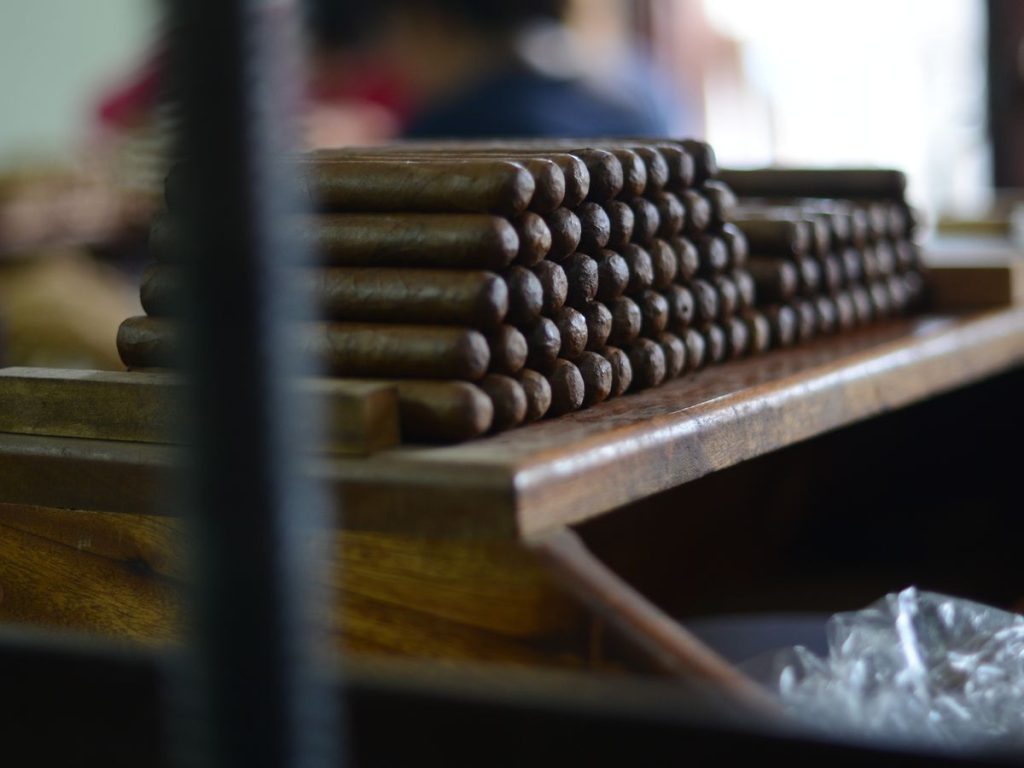
Once rested, cigars move to the packing room. There, every cigar is weighed again and checked by eye before it is boxed or bundled.
Where Are Our Short Filler Cigars Made?
In the second factory, which makes only short filler cigars, at two quality levels. The building’s ground floor also holds our fermentation pilones.
Our short filler cuttings come from our own premium and ultra-premium production, sorted by strength into mild, medium, and full. When an order is exceptionally large, we can add sorted short filler from other large Estelí factories we have long worked with.
The ultra-premium level is our Cuban sandwich, a hybrid we class as short filler. Half or quarter leaves are laid in among the cuttings, a double binder surrounds them, and a premium wrapper goes on last. The name describes that layered filler, not Cuban tobacco.
At the premium level, the cuttings alone make up the filler, under a single binder leaf and a quality wrapper.
What are tobacco pilones?
Pilones are piles of cured tobacco, stacked so the leaf ferments. Packed tight and damp, a pile warms up from the inside, with no outside heat. Its temperature is watched, and the pile is broken down and rebuilt, again and again, before it can get too hot. Fermentation shapes much of a tobacco’s taste and aroma, and it helps turn harsh leaf into leaf that smokes smoothly.
Some of the tobacco we use is our own, but most is bought in. That is normal in the cigar industry, since few factories own farms in every region their blends draw on. These pilones ferment tobacco for our cigars, and some of the leaf we buy comes here for its final fermentation. Either way, the aim is to develop the flavor and burn characteristics we like and need in our blends.
From processing to packing
Like the main factory, this one has its own tobacco processing area, a production room with rolling tables, a factory manager, and quality checks at the tables. Its cigars are all handmade too. Newly rolled short filler cigars rest in an aging room of their own, then go to packing. Most leave in bundles, plain wooden boxes, or lower mid-tier boxes.
How Are Your Cigars Checked for Quality?
On the factory floor, at several points: scales and ring gauges at every rolling table, a draw test for every long filler cigar, spot checks by the factory floor manager, and a final weigh-in of every cigar in the packing room. Each check is laid out, step by step, on our cigar quality control page.
- Scales and ring gauges at every rolling table. Each rolling table has two scales accurate to a tenth of a gram (0.1 g), plus ring gauges for the size being rolled, so weight and thickness are checked where the cigars are made.
- A draw test for every long filler cigar. Before the wrapper goes on, each long filler bunch is tested on our Drawmaster, a draw-testing machine that measures how easily air passes through a bunch, and any one outside the set draw range is rejected. A second set of scales sits alongside the machine. If a roller’s cigars miss the range too often, that roller gets more training.
- A check for roundness. Rolling a cigar across a flat surface is an old-fashioned way to see that it is perfectly round. Box-pressed cigars, which are squared off on purpose, skip this one.
- Spot checks. Our factory floor manager, a different person from the factory managers who run the production rooms, spot-checks cigars during production.
- A final weigh-in. Every cigar is weighed on its own before it is boxed or bundled, as part of a last inspection in the packing room.
Why so much weighing? Weight is a quick read on how well a cigar has been filled: too heavy for its size, and it may draw too tightly and not be smokable; too light, and it may draw too loosely, not have the correct ratios of tobacco, and suffer burn issues. Weighing every cigar on its own means that one that is off for its size can be caught before it is packed.
For long filler, the tolerances depend on the quality level you choose, and the Best (ultra-premium) level gets our strictest checks. For short filler, the bunch and the finished cigar are each weighed against set weights, a metal ring gauge confirms the diameter, and our team inspects each cigar by hand and eye.
How Long Are Cigars Aged Before They Ship?
Ninety days or more is our advice for newly rolled cigars, and each factory has an aging room for that rest, which is already built into the timelines we quote.
Before that rest, our cigars are brought to the right humidity in a drying room built for the job, then frozen for 72 hours in our own chest freezers to kill any tobacco beetle eggs in the leaf.
Even after drying, a newly rolled cigar’s leaves have not had time to settle together. Rest lets the moisture between them even out and the different tobaccos come together into one flavor.
There is no industry-wide rule on resting time, so the 90 days is our own guideline. On a large order, we can ship in batches as each one finishes resting, rather than holding back the whole run.
That rest is different from aging the leaf itself, which happens before rolling. For long filler, tobacco aged much longer than usual is an option at the Best (ultra-premium) level.
For every blend, we keep reference cigars in the aging room. Current production is tested against them continually, both right after rolling and after time to rest, and checked against our blending notes. Every harvest is a little different, so the recipe is adjusted season by season to keep each blend true to the version you approved.
Who Works on Your Project?
One Cigar Co Lab team works on your project. Our founder, Paul Anthony, is part of it, as are Andrius Petručenia and master blender Steven Hernandez.
So is everyone in the two factories, including the tobacco sorters who separate the leaf by size and color, the rollers who make each cigar by hand, and each production room’s own factory manager.
The team reaches past the factory doors, too. It includes the partners who make bands, boxes, packaging, and accessories for our clients.
Each of us has a different job, but we all work toward the same goal: getting your project done on time, with clear communication along the way.
Questions About Making Cigars in Nicaragua
Why make cigars in Estelí, Nicaragua?
Estelí is where Nicaragua’s cigar industry is centered. Tobacco grows in the valleys around the city, and cigars are its main trade. Workshops for bands, boxes, and packaging operate in and around it too, and when one of our partners is based here, we can check their work in person. Our guide to Estelí tells the city’s story.
Can cigars made in Nicaragua be imported into the US?
Yes. The United States has no embargo on Nicaraguan cigars, and they can be sold there to adults 21 and older. A business that imports cigars into the United States needs a federal importer permit from the Alcohol and Tobacco Tax and Trade Bureau, and other countries set their own import rules. Cuban tobacco is different: it is banned in the United States, and we never use it in any cigar we make.
Can I visit you in Estelí?
Yes, clients are welcome. Some come for blending sessions of up to a week in The Lab, others to see their cigars in production. Let us know when you’d like to come, and we’ll plan the visit around where your project stands.
How big is a typical order, and how long does it take?
Brands usually start with a first run of 5,000 to 25,000, and several have gone past 100,000 cigars. Projects for companies, clubs, events, and collectors tend to begin near 1,000. Starting from nothing typically takes 6 to 9 months, while a project with its logo and artwork ready takes 4 to 8. Both include the cigars’ rest at the factory.
Can you handle large orders?
Yes. We are a dynamic operation and can scale up or down with what our clients need. For large clients, we usually agree on a production schedule so we can plan how factories and rollers are used and ensure enough tobacco is ready to roll.
Do you only make the cigars?
No. We are full service: we also manage your bands, boxes, and packaging, which our trusted partners make, and we can handle shipping at cost to clients around the world, so the whole project runs on one plan. If you only need the cigars, or a single service, that works too.
Two Buildings, One Team
- Main factory: long filler, The Lab, aging, and packing
- Second factory: short filler and fermentation pilones
- The Lab: our blending room, led by our master blender
- Checks: weight, ring gauge, and draw (long filler)
Where to Next
Tell Us About the Cigar You Want to Make
A 30-minute conversation is enough to scope your blend, your packaging, and your real timeline. No pressure, no deposit, just straight answers from the people who’ll actually make your cigars.
We answer every serious inquiry within one business day.