
Cigar Quality Control: Measured, Not Promised
We built our own benchmark by measuring retail boxes from other manufacturers. Here is how we check every cigar we make, from bunch to box.
How Do You Measure Cigar Quality?
With numbers. A cigar’s weight, its ring gauge, and how easily it draws can all be measured, and together they say a great deal about how well it was built. We measure our own cigars at several stages of production, and cigars already on store shelves too, which gives us real data on industry baselines.
“Premium” without numbers is just an adjective. Anyone can print the word on a box, so our cigar quality control puts numbers behind it.
We buy full boxes of other manufacturers’ cigars at retail stores in the United States, rest them, and then weigh and draw test every cigar inside. So far we have tested 50 boxes, and the library keeps growing. We don’t know of another factory that has built a benchmark like it.
Below is how that benchmark works, followed by every check your cigars go through on their way to the box.
How We Built a Benchmark from Retail Boxes
We wanted to know what the cigars in a finished box really measure by the time a smoker can buy them. Every box in our library goes through the same seven steps:
- Buy it at retail. We use only full, unopened boxes bought from retail stores in the United States. That way we test exactly what a brand has shipped for smokers to buy.
- Rest it. Before testing, each box rests for 90 days in what we consider ideal conditions: 65 to 70°F (about 18 to 21°C) and 65 to 69 percent relative humidity. We can’t know how a box was stored before we bought it, so this evens out those differences.
- Weigh every cigar. Each cigar goes on a scale that reads to 0.1 g.
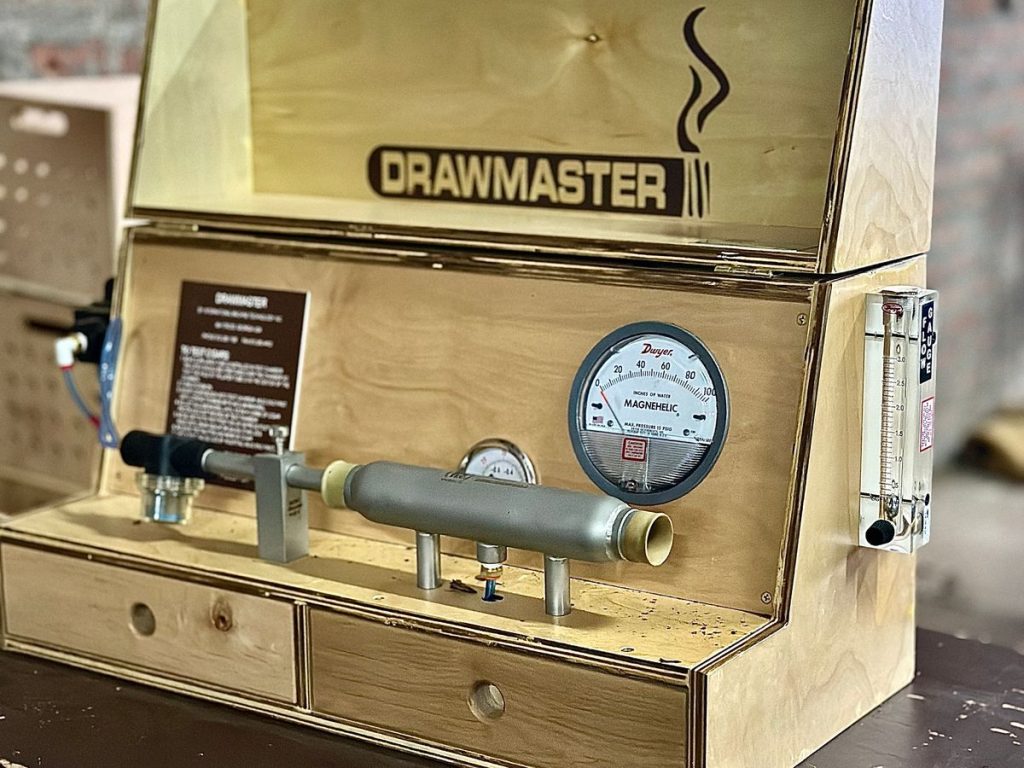
- Test every draw. We cut the same small amount off each cap and then test the cigar on our Drawmaster. The machine is calibrated and double-checked before each box.
- Record the range. For each box, we note the spread of weights from the lightest cigar to the heaviest, and of draws from the tightest to the loosest.
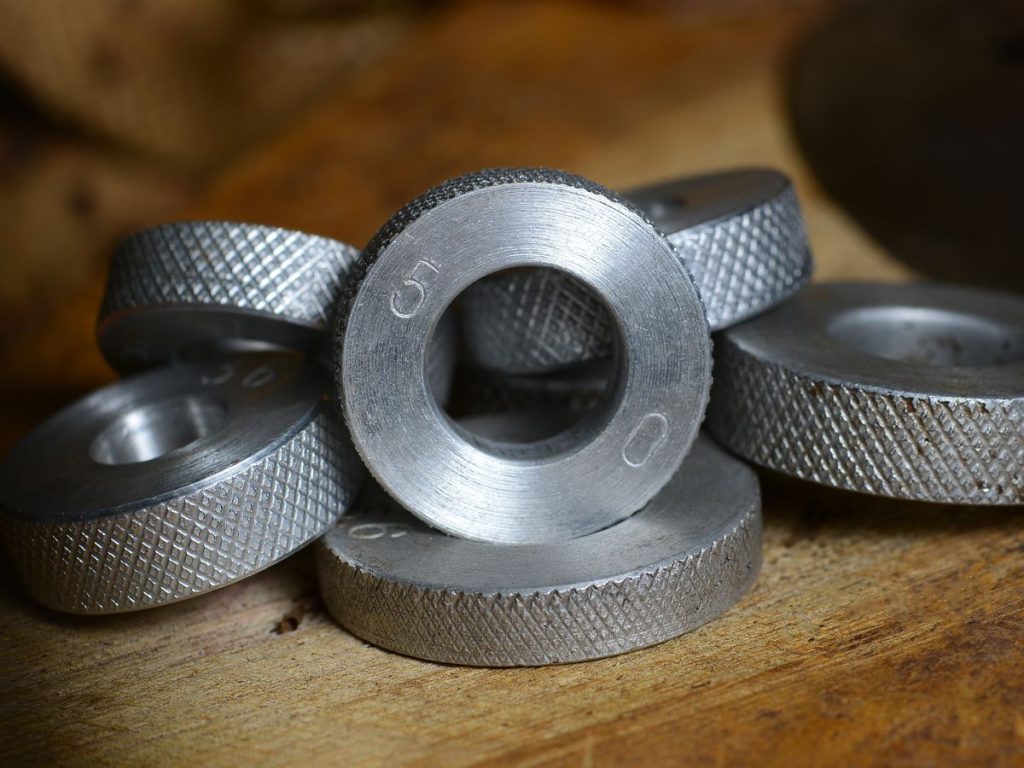
- Gauge and roll every cigar. Each cigar goes through metal ring gauges, and then we roll it along the table to see whether it is perfectly round.
- Inspect every cigar. Finally, we look each cigar over for sun spots or discoloration and feel it for hard or soft spots, noting anything we find in our tracking database.
Of the boxes tested so far, 36 came from manufacturers in Estelí and 14 from outside it, including cigars made in Honduras and the Dominican Republic. Most of the cigars are toros, the most popular size in U.S. cigar shops, so we are comparing apples to apples as far as possible.
The results give us overall tolerance ranges across every factory tested, and we can zero in on a single factory or brand in our library.
For brands comparing manufacturers
Choosing who will make your private label cigars is hard to do on promises alone. Our benchmark gives you something firmer: where our tolerances sit against the ranges we have measured elsewhere.
We have run the same tests several times for clients who brought us cigars from the factory they were using, so they could see what they had next to what we offer. If your brand is thinking about moving production, we can test your current cigars too.
Why the results stay private
We are not here to talk badly about other brands, so we don’t publish the results or name the factories tested. If you’d like a closer look, we’re happy to share the numbers on a call, one to one.
We are here to make the best-value cigars, and the benchmark gives us the numbers to back that up. The value comes from good tobacco, the checks on this page, and a team in Estelí managing every part of production for you.
That said, we can’t test the quality of the tobacco or its flavor in hard numbers. So on those counts, we would never claim to be better than anyone else. What we do know is how the cigars on store shelves measure up on the metrics we can track, and in our own cigars, those metrics are within our control.
Tighter Tolerances at Every Long Filler Level
A tolerance is how far a cigar may stray from its target weight or draw before it is rejected. Tolerances exist because no cigar is perfect, ours included. Each one is made by hand, from tobacco leaves that are never exactly alike. Long filler is made at our Best, Better, and Good levels, and the tolerance ranges narrow with each step up.
When we compare our ranges with the industry standard, we mean the overall ranges in our retail benchmark. Boxes of our own rested cigars go through the same seven steps, so both sides are measured the same way. Testing leading brands’ cigars shaped the quality control steps on this page, and the results let us say with confidence that our cigars beat the industry standard on weight and draw. Even at Good, our entry level, our ranges are significantly tighter.
Color counts too: Best lines get extra wrapper grading and sorting, so the cigars in each box match more closely. If your project calls for even tighter ranges for weight, draw, or wrapper color, we can set them with you. Each limit we tighten means fewer cigars make the cut, which raises the price, and we quote that cost up front. See what sets our three long filler quality levels apart.
Long Filler Quality Control, Step by Step
On its way to the box or bundle, every long filler cigar we make is weighed five times and passed through a ring gauge three times, and it is draw tested before its wrapper goes on.
Each one is rolled by hand in our main factory. The bunch, filler leaves held in a binder leaf, is shaped in a mold and press, and then the roller applies the wrapper.
While a long filler blend is developed in our blending room, The Lab, it is given three target ranges: one for the bunch weight, one for the finished weight, and one for the draw. Production starts only once all three are firmly set.
Those ranges are specific to the blend and to the client. Not all blends weigh the same, so two 6 x 52 toros can come in several grams apart depending on the tobaccos in them. Draw is personal too: some clients like a firmer draw, and others prefer it a little looser.
From there, each cigar moves through eight steps:
- At the buncher’s table. The complete bunch is weighed before it goes into the mold and press. If it is above or below its range, it is rejected. The bunch is usually 1 to 1.5 inches longer than the finished cigar and has no wrapper yet, which is why it needs a weight of its own.
- At the Drawmaster. Out of the press, the bunch is weighed again, passed through a metal ring gauge, and tested on the Drawmaster for draw. If any of these readings is out of range, it is rejected before a wrapper leaf is spent on it.
- At the roller’s table. Before putting the wrapper on, the roller weighs the bunch one more time, so its weight has now been confirmed three times.
- With the wrapper on. The roller applies the wrapper, cuts the cigar to length, and weighs it again, this time against its finished weight, since the cigar has reached its true length with the wrapper leaf in place. It also goes through the ring gauge a second time.
- In the drying room. The cigars go into our custom-built drying room, which brings them to the ideal humidity.
- In the freezers. To protect them from tobacco beetles, the cigars are frozen for 72 hours: 48 hours at an extremely low temperature, then 24 hours at a warmer temperature that is still below freezing. After that, they are brought back to room temperature.
- In the aging room. The cigars rest, and we advise 90 days or more for every run.
- In the packing room. As part of the final inspection, each cigar is weighed and passed through the ring gauge again before its band goes on. Then cellophane goes over the cigars, and they are packed in boxes or bundles.
Other checks run alongside those eight steps:
- Two 0.1 g scales and a set of ring gauges matched to the size in production sit at every rolling table, and the Drawmaster station has scales of its own.
- The factory floor manager pulls cigars for spot checks throughout production.
- Our team is in Estelí all year and on the factory floors every day.
- If one roller’s cigars are rejected too often, we use it as a chance to train that roller, since there is always something to improve.
- An old-fashioned roll along a flat surface shows whether a cigar is truly round. Box-pressed cigars are the exception, since their squared shape is deliberate.
We built this system with many checkpoints along the way. As a private label cigar manufacturer, we always have several projects in the rolling room at the same time, so these checks keep every cigar on track and within its ranges.
How Are Short Filler Cigars Checked?
Each short filler blend gets two set weights, one for the bunch and one for the finished cigar, and every cigar is checked against them as it is made. Our short filler cigars are all handmade from 100% leaf tobacco in our second factory, about a kilometer from the first. That building has its own factory manager and quality control, and its rolling tables carry the same 0.1 g scales and ring gauges as our long filler tables.
The sequence runs like this:
- Before the press. The bunch is weighed before it goes into the mold.
- Before the wrapper. The roller weighs the bunch again before rolling the wrapper on.
- After the wrapper. The roller weighs the finished cigar, wrapper and all.
- Drying and freezing. As with our long filler, the cigars are dried to the ideal humidity, frozen for 72 hours in two stages, and then brought back to room temperature.
- In the aging room. The cigars rest before packing, and here too we advise 90 days or more.
- Before packing. Each cigar is weighed one final time. Depending on the project, it may carry a band or go without one, and it may be packed in a bundle or a box.
Only premium and ultra-premium tobacco goes into the filler. Learn how our two short filler levels differ.
Band and Box Quality Control
Your bands, boxes, and packaging come from vetted partners, and every delivery is checked on arrival at our factory. We compare it with the design samples and check its size, its accuracy, and its quality.
When a partner’s workshop is local, we also go there in person to see the job while it is being made. Makers farther away are partners we have trusted for years. In both cases, the aim is to catch a band in the wrong size or a box that doesn’t match its sample before it gets anywhere near your cigars.
We treat each project like it’s our own. Our pages on custom cigar bands and custom cigar boxes show how those projects run.
Final Quality Control and Packing
Packing is the last stop. After their rest, cigars reach the packing room, where each one gets a final inspection:
- The cigar. A last visual check makes sure it is 100% intact, with no tears or cracks, and that its wrapper is free of blemishes.
- The weight. Each cigar gets its final weigh-in.
- The band. Every band placement is checked against your brand guidelines.
- The box. Box designs and build quality get a last check before the cigars go in.
Only cigars that pass every check are packed, in boxes or bundles. This inspection is the last of many checks, and the closest to the moment someone opens the box.
If you’d like your cigars frozen once more before they ship, we send them to one of the industrial freezing facilities we trust here in Estelí, where they go through the correct freezing cycles. For container orders, we can also arrange climate-controlled shipping if desired.
How Do You Keep a Blend’s Flavor Consistent?
By tasting as well as measuring. Scales and gauges keep the build steady, but flavor takes a palate, so reference cigars of every approved blend stay in our aging room. Our team smokes current production side by side with them, from cigars just off the rolling tables to cigars resting in the aging room, and compares each with the notes made when the blend was developed.
Tobacco is a farm crop, and its character shifts with the weather of every growing season. When a new season’s leaf reaches the factory, our blenders rework your blend’s recipe so each new run stays as close to your approved cigars as the leaf allows.
Whether a cigar tastes good will always be a matter of opinion, and making one is as much art as science. So we control what can be controlled: the quality of our tobacco, the training of our rollers, the many checks each cigar passes, and the retail benchmark we measure our cigars against. That is how we craft the best cigars we can, consistently.
We’re as passionate about your project as you are. When it succeeds, you win, the people who smoke your cigars win, and so do we.
Cigar Quality Control Questions
How can you tell a good-quality cigar?
Start with what you can see. A well-made cigar is fully intact, with no tears, cracks, or blemishes on the wrapper, and its band sits where it should. Then come the numbers: the right weight for its blend and size, the right ring gauge, and a draw that is neither too tight nor too loose. Beyond that, the cigar has to be smoked, and that part is more personal and qualitative: the quality of the tobacco used and the overall composition and harmony of the blend.
How is a cigar’s draw tested?
With a machine that pulls air through the cigar and measures how much it resists, the same resistance a smoker feels on each puff. We use the industry-standard Drawmaster, and every long filler cigar goes on it before its wrapper is applied.
What is a plugged cigar?
A cigar that draws so tightly it is hard to smoke. Most often, the filler was twisted or knotted while the bunch was being made, though filler packed too tightly can do it too. Too little tobacco has the opposite effect: a loose draw that can smoke hot. Weighing every bunch before it is pressed helps us catch one with too much or too little tobacco early.
How much does a cigar weigh?
A slim lancero weighs about 10 grams and a thick gordo 20 grams or more, while smaller sizes weigh less. Even within one size, no single number fits every cigar, because different tobaccos weigh differently. So a heavier cigar is not automatically better or worse. What matters is that every cigar falls inside the weight range set for its own blend.
What is ring gauge, and how is it checked?
Ring gauge is a cigar’s diameter, measured in 64ths of an inch, so a 52 ring gauge cigar is 52/64 of an inch (about 20.6 mm) across. We check it with metal ring gauges made to the exact size being rolled, and the cigar has to pass through cleanly.
Why freeze cigars?
To kill tobacco beetles, often called cigar beetles. A female beetle can lay her eggs in tobacco leaf, where they are too small to notice. If the cigars are later kept too warm and humid, the eggs can hatch, and the larvae chew tiny holes through the cigars. A long, deep freeze kills the beetle at every stage of its life, eggs included, so we freeze our cigars for 72 hours in two stages and bring them back to room temperature before they rest.
We handle this freeze in-house, on a rolling schedule, using our own set of chest freezers. They have Wi-Fi temperature and humidity gauges, so we can see exactly what is happening in every cycle and stay in full control of it. We also fumigate all areas of our facilities regularly.
Why do newly rolled cigars rest before they ship?
A newly rolled cigar hasn’t settled yet, even after drying and freezing. Its wrapper was dampened for rolling, and its leaves have only just been rolled together, so the moisture needs time to balance and the flavors need time to meld. Our advice is to rest every run for 90 days or more, and our final checks come after that rest, so the cigars we inspect are the cigars you receive.
Are your cigars handmade?
Yes. All of our cigars are handmade, long filler and short filler alike. People, not machines, decide how much tobacco goes into each one, and our scales are there to check it.
Quality Control, Measured
- Benchmark: retail boxes, weighed and draw tested
- Levels: tighter ranges at Good, Better, and Best
- Rolling: every cigar weighed at several stages
- Packing: a final look at cigar, band, and box
Where to Next
Tell Us About the Cigar You Want to Make
A 30-minute conversation is enough to scope your blend, your packaging, and your real timeline. No pressure, no deposit, just straight answers from the people who’ll actually make your cigars.
We answer every serious inquiry within one business day.