
Nicaraguan Cigar Tobacco
Highland valleys, volcanic soil, and Cuban-seed heritage give Nicaraguan tobacco its strength and range. Nicaragua is also home to our two factories.
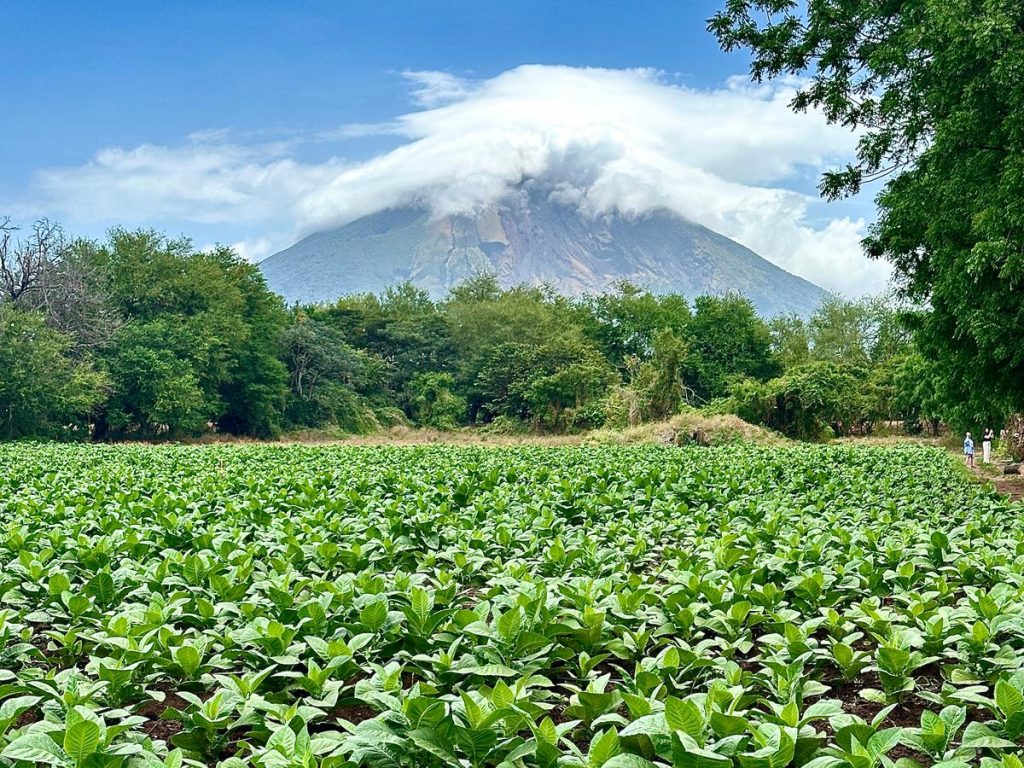
Where Nicaraguan Cigar Tobacco Grows
Each of Nicaragua’s growing regions gives its tobacco a different character, from the strong leaf of Estelí to the sweet wrapper of Jalapa and the island tobacco of Ometepe. Select a pin on the map or a card below to explore each one. We also blend Nicaraguan leaf with tobacco from Mexico, Indonesia, Ecuador, and other countries on our tobacco regions page, choosing the right leaf for each part of the cigar.
Nicaragua’s Place in Premium Cigars
Nicaragua became the largest supplier of premium cigars to the United States in 2016, when it passed the Dominican Republic.
Cigars are one of the country’s important exports. In Estelí, where we live and work, cigars are the main industry.
A big part of Nicaragua’s appeal is its range. Within a few hours’ drive of each other, the northern valleys grow everything from strong, peppery filler to sweet, elastic wrapper leaf. And since the 1960s, growers, sorters, rollers, and blenders have built up their skills here, alongside the box makers, band printers, and packaging workshops that support them.
What does Nicaraguan tobacco taste like?
Nicaraguan tobacco is best known for pepper and spice, rich earthiness, and natural sweetness, often with plenty of body. That reputation comes largely from Estelí, whose strong ligero sets the tone in many full-bodied cigars.
The country grows a much wider range than that reputation suggests, though. Jalapa leaf is mild to medium, sweet, and creamy. Condega sits in the middle, earthy and balanced. Pueblo Nuevo filler is heavy and mineral, Masatepe’s native Chilcagre is dark, resinous, and funky, and Ometepe adds sweetness with a mineral edge. So a Nicaraguan cigar can be mild, medium, or full, depending on which leaf goes into it.
Compared with its neighbors, Nicaraguan tobacco is generally bolder and spicier than Dominican leaf, which is known for a smoother, milder style. It has more in common with tobacco from Honduras, just north across the border, which is also earthy and rich.
Soil, altitude, and season
Nicaragua is the largest country in Central America, with coastlines on both the Pacific and the Caribbean. Most of its cigar tobacco grows in the northern highlands, in the valleys around Estelí, Condega, Pueblo Nuevo, and Jalapa. Their towns sit between about 560 and 840 meters (1,800 to 2,800 feet) above sea level. Masatepe, in the department of Masaya, grows its native Chilcagre lower down, on a plateau about 450 meters (1,500 feet) up. Far to the south, the island of Ometepe in Lake Nicaragua grows a small amount of its own.
The soil changes from valley to valley, and that is a big part of why each region’s tobacco tastes different. Estelí’s is dark and formed from volcanic rock, Jalapa’s is reddish and rich in clay, Condega’s is dry and rocky, and Ometepe’s is built from volcanic ash.
Nicaragua’s rainy season runs from about May to October. Cigar tobacco is grown in the drier months, from about November to May, depending on the year’s weather, so the fields can have controlled irrigation. In our experience, most farms on the mainland draw that water from underground wells, while the Ometepe farms we work with use water from the lake.
A short history of Nicaraguan tobacco
Tobacco is native to the Americas, and Indigenous peoples across the region grew and smoked it long before the Spanish arrived. Under Spanish rule, the tobacco trade in Central America became a royal monopoly in 1766, and after independence the government kept control of it for decades. As late as 1897, it took a presidential decree to open Jinotega and Matagalpa as official tobacco-growing zones.
The modern cigar industry came later. Cuban-seed tobacco was first planted in Jalapa in the 1950s, but the real growth began after the Cuban revolution in 1959 and the US embargo on Cuba in 1962. Cuban growers and cigar makers who left the island looked for land that could grow Cuban-style leaf, and they found it in the northern valleys around Estelí, Condega, and Jalapa. With government financing in the 1960s, they planted Cuban seed, built curing barns, and opened the first factories.
The 1980s were hard. War damaged farms and factories in the north, and a US trade embargo from 1985 to 1990 cut Nicaraguan cigars off from the American market. Some producers moved their operations to neighboring Honduras for a time, and most of them later came back. The American cigar boom of the 1990s then brought new demand and investment, and the industry has grown a great deal since. In Estelí alone, the number of cigar factories roughly doubled between 2011 and 2021, from about 40 to about 80. The cigar boom that followed the global pandemic brought another rise in farm and factory activity, as demand for good tobacco and skilled rollers outpaced supply.
Nicaraguan leaf in a global blend
In the cigar trade, a cigar made entirely from one country’s tobacco is called a puro (in Spanish, the word simply means cigar). Nicaraguan puros are a popular style, and we make them too. But many of our blends combine Nicaraguan leaf with tobacco from other countries, because each origin does something different. We source tobacco from every country on our tobacco regions page except Cuba. A few examples:
- Indonesia: we use Indonesian binder in many of our blends. It burns slowly and creates an even burn line, which helps the construction of the cigar and makes it more enjoyable to smoke.
- Mexico: leaf from the San Andrés Valley in Mexico makes a dark, rich maduro wrapper that pairs well with Nicaraguan filler, and it is used as binder too.
- Ecuador: near-constant cloud cover in Ecuador filters the sun like shade netting, growing thin, even wrapper leaf, from mild Connecticut seed to spicier Habano.
- Brazil and Cameroon: Brazil grows dark, naturally sweet leaf, and Cameroon is known for a textured, spicy-sweet wrapper.
- Honduras and the Dominican Republic: filler and binder that range from rich and earthy in Honduras to smooth and aromatic in the Dominican Republic.
A common approach is to build the filler around Nicaraguan tobacco, because its strength adds layers of flavor and depth that few other regions can match. The binder and wrapper are then chosen to suit the blend, wherever they grow.
Nicaraguan tobacco and the Cuban style
Much of Nicaragua’s cigar tobacco is grown from Cuban-seed varieties, such as Criollo and Corojo types, a tradition started by the Cuban growers who helped build the industry here. Jalapa’s soil is often compared to the Vuelta Abajo, Cuba’s most famous tobacco district. In our experience, Ometepe leaf also shares the salty, mineral edge we find in some Cuban tobacco, particularly leaf grown nearer the coast.
That heritage matters, because many clients ask us for a Cuban-style cigar. We do not use or sell Cuban tobacco, and US law keeps it out of the American market. What we can do is build that flavor profile from legal, non-Cuban leaf, from Nicaragua and from Cuban-seed tobacco grown in countries like Honduras and the Dominican Republic. Our homage blends page explains how we approach it.
Are Nicaraguan cigars legal in the US?
Yes. Nicaraguan cigars are legal in the United States and can be sold to adults 21 and over. The US trade embargo on Nicaragua ended in 1990, and Nicaraguan cigars have been imported legally ever since. As with any imported cigar, the importer needs the right licenses and permits for their destination country.
Seeing it for yourself
The best way to understand Nicaraguan tobacco is to see it in the field. We invite clients to visit us in Estelí, whether for a few days of blending sessions at the factory or a longer trip around Nicaragua. To see plants growing in the fields and leaf curing in the barns, plan your visit for the growing season, roughly November to May. Thinking about a brand of your own? Our guide to starting a cigar brand walks through the steps.
Every January, the Puro Sabor festival also brings cigar lovers from around the world to Nicaragua, with visits to factories and tobacco fields in Estelí. It is a good introduction to the industry, and to the town we call home.
The regions, one by one
Estelí
Estelí is the center of Nicaragua’s cigar industry and home to our two factories.
The valleys around the city grow thick, oily leaf in dark soil formed from volcanic rock, with bold pepper, spice, and earth. It is used in every part of a cigar, but its most important role is as ligero at the center of the filler, where a small amount sets the strength of the whole blend.
Because it is so strong, blenders usually balance it with sweeter or milder leaf, from Nicaragua or abroad. Read more about Estelí tobacco, its history, and life in the town.
Condega
Condega lies about 30 km (19 miles) north of Estelí, in one of the drier corners of northern Nicaragua.
Its rocky soil grows mostly sun-grown tobacco with a thinner leaf than Estelí’s, medium-bodied and earthy, with natural sweetness and light spice.
That thinner leaf makes it a natural binder, and much of the harvest also goes into filler, where it bridges strong and mild tobacco. Find out more on our Condega tobacco page.
Jalapa
Jalapa is a valley on the Honduran border, three to four hours’ drive north of Estelí, and it grows more wrapper leaf than anywhere else in Nicaragua.
Its reddish, clay-rich soil and its cooler, more humid climate favor thin, even, notably elastic leaf, much of it shade-grown. Jalapa tobacco is mild to medium, sweet, creamy, and aromatic, but not flat.
As filler, it adds sweetness and softens bolder tobacco. Our Jalapa tobacco page covers the valley, its Cuban-seed history, and its Maize Fair.
Masatepe
Masatepe lies in the department of Masaya, south of Managua, well outside the northern valleys where the modern cigar industry grew.
Its growers still plant Chilcagre, an old native black tobacco that Nicaragua’s laws were already naming in the 1860s. They grow it through the rainy season, dry it in the sun, and ferment it underground in palm-lined pits, which gives a strong, dark, resinous leaf with a funky aroma.
We use it as a filler accent, and every crop is small, so it is not always available. Our Masatepe tobacco page tells its story, from the old planting laws to the pit.
Ometepe
Ometepe is an island of two volcanoes in Lake Nicaragua, far to the south of the other regions.
Its volcanic soil and lake-watered fields grow a small amount of rich, sweet, earthy tobacco with a mineral, slightly salty edge, medium to full in strength.
We work directly with Roberto and Sergio, two brothers who grow tobacco on the island. Blenders use it in small amounts in the filler, to add sweetness and depth. Our Ometepe tobacco page has more, including tips for visiting the island.
Pueblo Nuevo
Pueblo Nuevo is a small micro-region just west of Condega, about a 90-minute drive from Estelí, with a microclimate and soil of its own.
Its tobacco is heavy, dense, and full-bodied, with a rustic, mineral earthiness. Blenders use it almost entirely as filler, mostly viso and ligero from the upper plant, to give a cigar body and depth, and leading producers keep it separate from general Estelí leaf.
See how it fits into a blend on our Pueblo Nuevo tobacco page.
Where It Fits
- Filler: from Estelí’s strong ligero to Jalapa’s sweet, aromatic leaf
- Binder: Condega’s thinner, medium-bodied leaf
- Wrapper: shade-grown Jalapa and sun-grown Estelí leaf
Where to Next
Tell Us About the Cigar You Want to Make
A 30-minute conversation is enough to scope your blend, your packaging, and your real timeline. No pressure, no deposit, just straight answers from the people who’ll actually make your cigars.
We answer every serious inquiry within one business day.