
Cameroon Wrapper: Africa’s Toothy Leaf
A thin, sun-grown wrapper from small family farms in Central Africa, prized for its tooth, baking spice, and subtle sweetness.
A Wrapper Known by Its Tooth
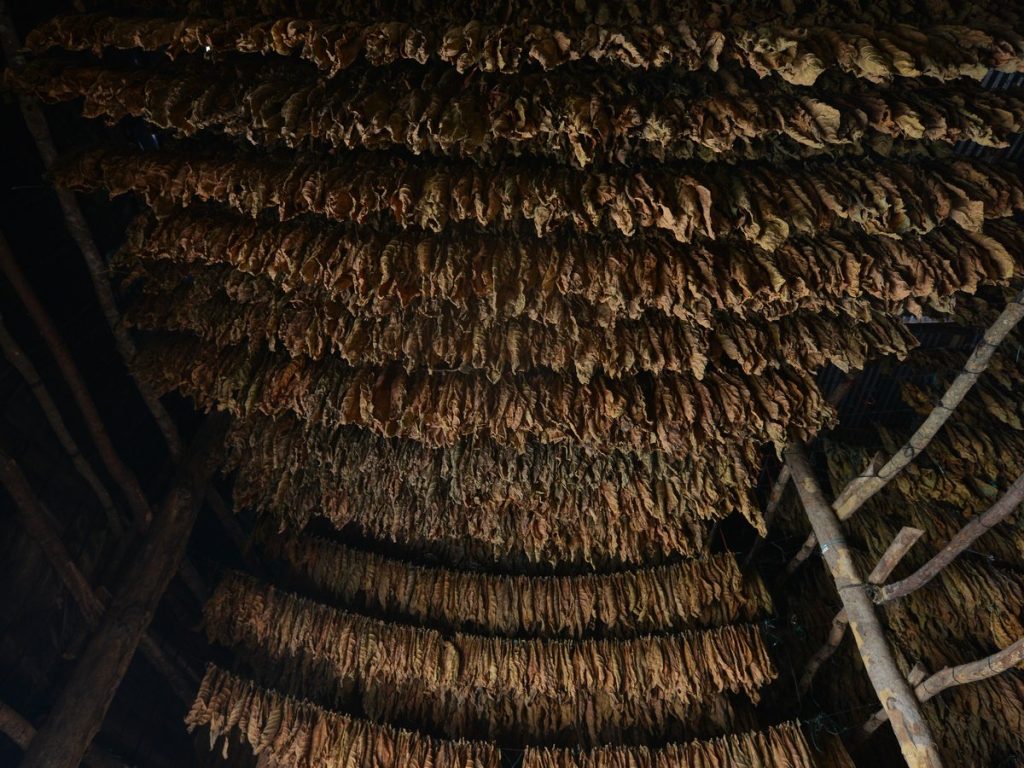
Cameroon wrapper is a thin, sun-grown cigar wrapper leaf from Central Africa. It is known for its “tooth,” the tiny raised bumps of concentrated oils that cover the leaf, and for a flavor of baking spice, cedar, and subtle sweetness that is rich without being intense.
The trade name covers leaf grown in eastern Cameroon and in the neighboring Central African Republic.
Where is Cameroon tobacco grown?
Cameroon sits where West and Central Africa meet, with a coastline on the Gulf of Guinea. Its wrapper tobacco grows far inland, in the forested east of the country, around Batouri, a town near the border with the Central African Republic. The growing area continues east across that border.
The farms are remote, in rainforest country reached by long dirt roads.
Sun-grown on small family farms
Cameroon tobacco descends from Sumatra seed, which came originally from Indonesia. It grows in open sun, without the shade cloth used for Connecticut shade wrapper. Steady cloud cover during the growing season softens the light, much as it does for Ecuador’s cloud-grown wrapper, so the leaf still comes out thin and even in color.
The crop is grown by family farmers on small plots, traditionally about an acre each. Most of the work is done by hand, without tractors or irrigation, and the soil is rich enough that growers do not need to add fertilizer. Small plots and hand farming keep supply limited.
What does Cameroon wrapper taste like?
Cameroon wrapper is usually mild to medium in strength, but it is prized for a rich, sweet, and spicy flavor. Expect baking spice, such as cinnamon, along with cedar and a subtle sweetness. Depending on the cigar, you may also find toast, leather, or a touch of pepper.
The look is just as distinctive. The leaf is a deep brown, with the fine bumps of its tooth across the surface, and it is thin, supple, and elastic.
A delicate leaf to work with
Cameroon is a hard wrapper to work with. It is thin and delicate, and it does not stand up to heavy fermentation the way some thicker wrappers do.
Its leaves have also traditionally been small, which limits how large a cigar it can cover. Larger leaves have become more common in recent years.
From French plantations to a comeback
Germany claimed Cameroon as a colony in 1884, and after World War I it was divided between France and Britain. In the late 1950s, the French state tobacco monopoly set up plantations there and trained growers. Central African wrapper went on to cover both machine-made and premium hand-rolled cigars.
Quality and demand slipped in the 1980s, and in 1993 the French pulled out. The leaf nearly disappeared. A family of tobacco merchants, longtime buyers of the leaf, then formed a new company with Central African partners and rebuilt the supply, investing heavily in the growing areas and their workers.
Is all Cameroon wrapper from Cameroon?
Not always. Cameroon seed is also grown in other countries, including Ecuador and Honduras, and some of that leaf is sold as Cameroon too.
To tell them apart, the trade often calls leaf from Central Africa “African Cameroon.” On this page, Cameroon means the African leaf.
How blenders use Cameroon wrapper
Most of a cigar’s flavor comes from its wrapper, so a Cameroon wrapper sets the character of the whole blend. Its spice and sweetness suit milder blends and stronger ones alike, which helps explain its popularity with blenders and smokers.
Africa in miniature
Cameroon is often called “Africa in miniature” because it has all of the continent’s major landscapes, from coast and rainforest to mountains, savanna, and desert. Mount Cameroon, an active volcano near the coast, is its highest point.
About 30 million people live there. Yaoundé is the capital, Douala is the main port and business center, and French and English are the official languages, alongside some 250 local languages. The name goes back to Portuguese sailors, who in 1472 named a river there Rio dos Camarões, or Shrimp River.
Where It Fits
- Wrapper: thin, toothy, deep brown leaf, sun-grown in Central Africa
- Flavor: baking spice, cedar, and subtle sweetness
- Blends: suits milder and stronger filler alike
Where to Next
Tell Us About the Cigar You Want to Make
A 30-minute conversation is enough to scope your blend, your packaging, and your real timeline. No pressure, no deposit, just straight answers from the people who’ll actually make your cigars.
We answer every serious inquiry within one business day.