
American Tobacco: Shade and Broadleaf
The United States grows Connecticut shade and broadleaf wrapper, and its cigar history runs from New England farms to Ybor City.
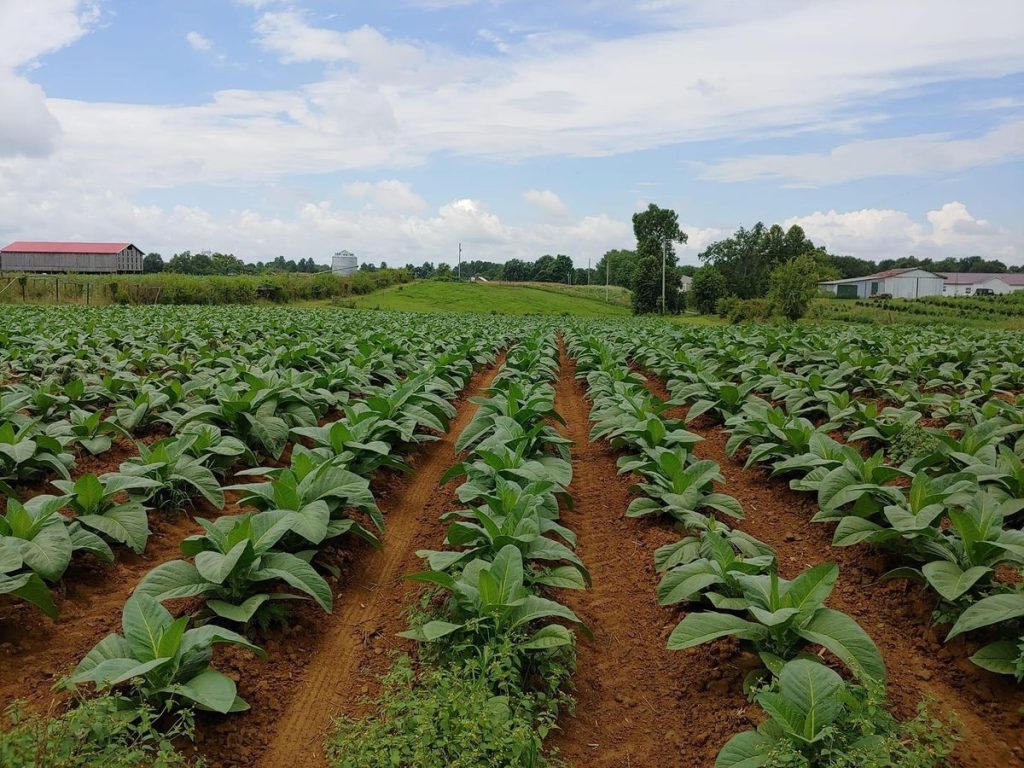
Home of Connecticut Shade and Broadleaf
The best-known growing areas for American cigar tobacco are the Connecticut River Valley and Pennsylvania’s Lancaster County. Their signature leaves are Connecticut shade, a mild, golden wrapper, and Connecticut Broadleaf, a dark, sweet wrapper used on maduro cigars.
The United States also has a long history of growing filler and binder. Federal tobacco standards still list cigar-leaf types from New England to Wisconsin and northern Florida.
Where is American cigar tobacco grown?
The Connecticut River Valley is the heart of it. Tobacco country stretches from Hartford, Connecticut, north to Springfield, Massachusetts, on soil left behind by glaciers. Lancaster County lies in southeastern Pennsylvania.
Florida and Georgia once grew shade wrapper too, around Gadsden County, Florida, and Decatur County, Georgia, just across the state line. That crop ended in the 1970s.
The Connecticut River Valley
Colonists were growing tobacco in the valley by about 1640, at first for pipes. In the 1800s the valley turned to cigar leaf, and it produced two very different wrappers.
Connecticut shade
Connecticut shade is a thin, pliable wrapper with very fine veins. It cures to a golden brown and tastes mild. Growers get it by covering the fields with cloth tents that diffuse the sun and hold in humidity.
The method dates to about 1900, when valley growers set out to compete with the fine Sumatran leaf then being imported. Plants grown from Connecticut seed, a derivative of Sumatran seed, turned out to suit the tents. Only leaf grown in the valley counts as true Connecticut shade, even though Connecticut seed is also grown in Ecuador and other countries. The real thing costs around twice as much as the Ecuadorian version.
Shade is slow, expensive work. The plants reach 8 feet (about 2.4 meters) or more under the cloth, and crews pick the leaves a few at a time, up to six times a season. Cured leaf hangs in barns for up to six weeks, and it takes more than a year to turn a picked leaf into one ready for a cigar (see our page and documentary on How A Cigar Is Made).
The work drew people from far away. After World War I, growers recruited college students from across the South, and after 1947 they recruited workers from Puerto Rico and Jamaica, many of whom later settled in Connecticut.
At its height, shade covered about 20,000 acres of the valley. It has since shrunk to a small fraction of that, as most growers moved to broadleaf or other crops when demand fell and development pressure on farmland grew.
Connecticut Broadleaf
Broadleaf grows in full sun. It is a low, bushy plant with very wide leaves that turn very dark as they cure, and the whole plant is cut at the stalk and hung to dry. Broadleaf reached the valley in 1833 from Maryland seed and replaced the shoestring variety grown before it.
It spends about 70 days in the field and about 70 more curing in the barn, and the trip from field to finished cigar can take roughly three years. The leaf is thick and oily, with a dark, earthy flavor and a slight, raisin-like sweetness.
Broadleaf is easier to grow than shade and gets to market faster, with yields up to 500 more pounds per acre, which is why most of the valley’s tobacco is now broadleaf.
Pennsylvania’s Lancaster County
Lancaster County farmers turned to tobacco in the early 1800s, and the county’s limestone-rich soil proved well suited to cigar leaf. By the 1880s, about 200 tobacco warehouses stood in the county, 100 of them in the city of Lancaster.
The traditional local leaf is Pennsylvania Seedleaf, known to federal graders as type 41 and sometimes called Pennsylvania Broadleaf. It is a heavy, dark leaf that went mostly into cigar filler, and until the 1970s it was a preferred filler for many leading cigar companies. Amish and Mennonite farmers have long grown most of it.
Demand fell as overseas competition and higher prices took hold. County tobacco acreage dropped from a peak of about 35,000 acres in the late 1950s to under 9,000 by the mid-1990s, and many farmers moved to dairy and other crops.
Pennsylvania growers also raise wrapper, including Connecticut Broadleaf from Connecticut seed, and much of the state’s crop goes to cigar wrappers.
Florida and Georgia: the shade country that closed
Settlers from Virginia brought tobacco to Gadsden County in the late 1820s, and Florida wrapper leaf was famous in Europe by the 1840s. In the 1890s, growers in north Florida and southwest Georgia found that tobacco grown under shade made a lighter, thinner wrapper. Wooden arbors came first, then cheesecloth tents.
At its height, about 18,000 people depended on the crop for a living. Black shank disease nearly wiped it out by 1926, and the federal government opened the North Florida Tobacco Experiment Station to fight it.
The last commercial shade crops were harvested in the 1970s. Farm labor costs had climbed, cigar demand had fallen, and in August 1975 the U.S. International Trade Commission declined to put a tariff on foreign-grown shade tobacco.
Cigar tobacco is growing in Florida again on a small scale. In recent years, a small farm has brought sun-grown cigar leaf back to the state.
Other cigar-leaf states
Cigar leaf was once grown far beyond New England. Federal standards still name types for Havana-seed tobacco from New York, filler from Ohio’s Miami Valley, and binder from Wisconsin, where the crop centered on Edgerton in the south and Viroqua in the west.
How blenders use American leaf
Connecticut shade suits mild to medium cigars. Its golden color and mild flavor leave room for the blend underneath to lead. Many cigars sold with a Connecticut wrapper use leaf grown in Ecuador, which makes American-grown shade a specialty wrapper.
Connecticut Broadleaf is the opposite. It gives maduro cigars their dark color and a sweet, earthy flavor, and it is a strong, bold leaf. Many premium cigars also use it as binder, and some blends use it as filler. Pennsylvania grows broadleaf as well.
American leaf is one of the tobaccos Cigar Co Lab blends with, sourced through its suppliers and grower relationships.
A history of cigars in the United States
American cigar history runs through farms, port cities, factories, labor unions, an embargo, and a boom. Here are its main chapters.
Farm cigars and the first factories
Native peoples grew tobacco in North America long before European settlers arrived. Until the early 1800s, American cigar leaf was mostly shipped to the West Indies, rolled there, and sent back as finished cigars. A domestic cigar industry took shape after 1801.
Connecticut tradition credits Israel Putnam, a farmer and soldier, with bringing Havana cigars and seed home from the British campaign against Havana in the early 1760s. The first known American cigar factory opened in 1810 in Suffield, Connecticut. By 1870, factories stood across the country, and Pennsylvania, Connecticut, and New York each had hundreds.
Key West, Tampa, and the readers
Cuban and Spanish cigar makers reshaped the industry in Florida. Vicente Martínez-Ybor moved his operations to Key West in the late 1860s, then in 1885 built a cigar town near Tampa that became Ybor City. About 3,000 people were rolling cigars there by 1886, and workers hired readers to read newspapers aloud while they rolled. Before Cuba’s 1895 war of independence, José Martí visited Ybor City to gather support.
Tampa’s cigar industry peaked in the 1920s. The Great Depression and mechanization then hurt it, and only small shops kept hand rolling alive. A 1965 urban renewal project tore down much of Ybor City, which sparked a movement to preserve it.
Tenements, unions, and machines
In New York in the 1870s and 1880s, manufacturers pushed cigar making into tenement apartments, where whole families rolled cigars at home. Samuel Gompers, who rolled cigars with his father after the family arrived from London in 1863, led the cigar makers’ union fight to ban the practice. A young Theodore Roosevelt, then a state assemblyman, opposed the bill until Gompers took him on a tour of the slums. The law passed in the 1880s, and New York’s highest court struck it down in 1885.
Then machines took over. The number of U.S. cigar factories fell from almost 23,000 in 1910 to around 6,000 in 1929 as larger, mechanized plants replaced hand work.
Cigarettes, Cuba, and the embargo
Cigar smoking was common in the early 1900s, but it declined rapidly in the 1930s as cigarettes took over, and after World War II the cigar became known as the old man’s smoke.
Politics then changed the supply. In 1960, Cuba seized its cigar factories, and a U.S. trade embargo that took effect in February 1962 closed the American market to Cuban cigars. U.S. makers scrambled for substitute leaf from Puerto Rico, the Dominican Republic, Colombia, Brazil, and Honduras.
Cuban exiles opened cigar factories in Miami starting in 1961, though labor costs ended Miami’s run as a manufacturing center within about a decade. Many exiles moved on to Honduras, Nicaragua, and the Dominican Republic, where they started new farms and factories.
The cigar boom
Cigar sales were flat through the 1980s, with premium imports hovering around 100 million a year, and consumption hit its lowest point in 1993. The turn began in 1992, when Cigar Aficionado launched. Premium cigar imports rose from 107.4 million that year to 176.3 million in 1995, helped by celebrity smokers, cigar bars, cigar dinners, and more women taking up cigars.
Demand outran supply, because tobacco takes 18 to 24+ months to go from seed to finished cigar. Back orders reached about 55 million premium cigars by June 1996. The boom peaked in 1997 and then collapsed, closing many young brands, and the makers that survived, mostly in the Dominican Republic, Nicaragua, and Honduras, were growing again by 2001.
Cigars in the United States today
Premium cigars, which are handmade from long filler, remain a small part of the U.S. cigar market, a few percent of all cigars sold. In 2016, the FDA’s deeming rule brought all cigars under federal tobacco regulation, and premium cigar makers challenged it in court.
Since the global pandemic, cigars have seen another resurgence. Some attribute it to less alcohol consumption and a lot more people working from home. Whatever the reason, the industry is strong, and demand has held well.
Where to see the history
The Luddy/Taylor Connecticut Valley Tobacco Museum sits in Northwest Park in Windsor, Connecticut, the town where the first shade tent went up.
In Tampa, the Ybor City Historic District still has nine key cigar factories standing.
J.C. Newman and El Reloj
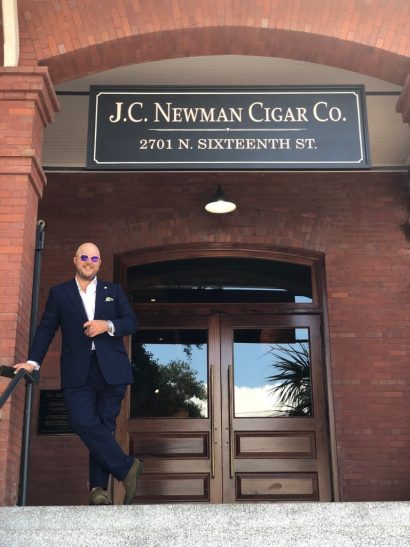
A few years ago, Cigar Co Lab founder Paul Anthony was fortunate enough to get a tour from Drew Newman of J.C. Newman Cigar Co. The factory in Ybor City is still very much active, and it is well worth a visit if you are in Tampa.
The building is known as El Reloj, Spanish for “the clock,” after the clock tower above it. It was built in 1910, and J.C. Newman bought it in 1954, when the company, founded in 1895, moved to Tampa from Cleveland. About a century ago, around 150 cigar factories stood in Ybor City, and by the company’s account this is the last of them still making cigars.
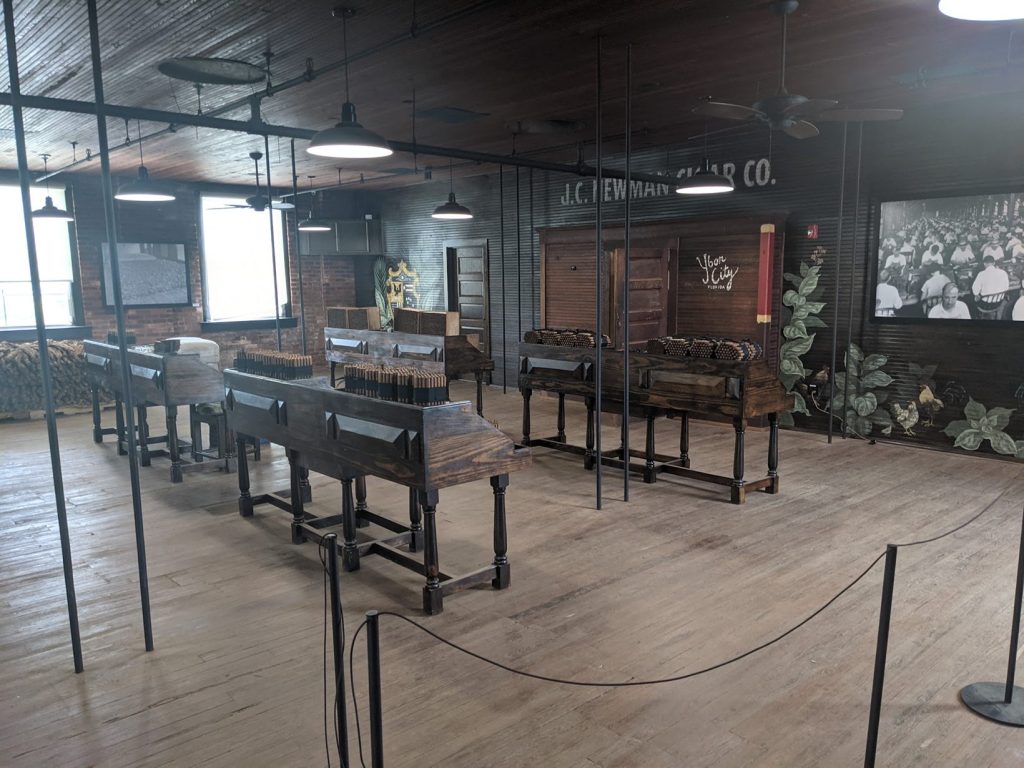
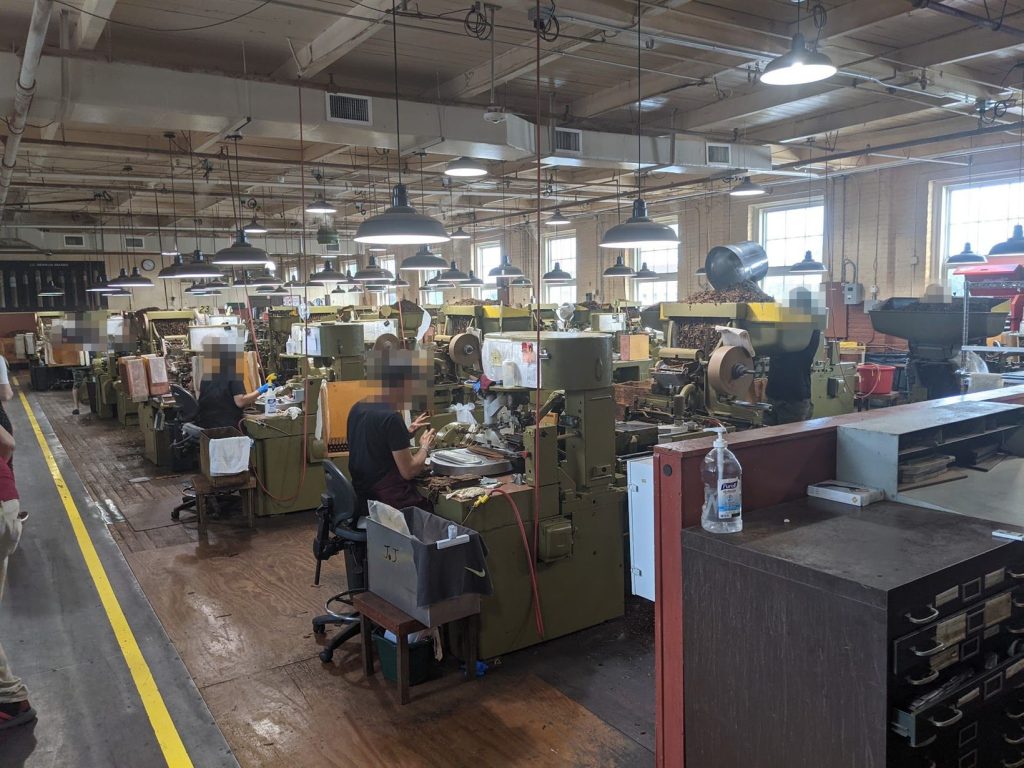
Inside, there is an active long-filler rolling room, still used for the company’s made-in-America cigar lines, and a machine-made cigar section where some of the machines were bought in 1930. A museum on the ground floor has an open-work clock tower movement in the middle.
Where It Fits
- Wrapper: Connecticut shade, for a golden, mild look
- Wrapper: Connecticut Broadleaf, for dark maduro blends
- Binder and filler: broadleaf and Pennsylvania leaf

Where to Next
Tell Us About the Cigar You Want to Make
A 30-minute conversation is enough to scope your blend, your packaging, and your real timeline. No pressure, no deposit, just straight answers from the people who’ll actually make your cigars.
We answer every serious inquiry within one business day.