
Indonesian Tobacco: Binder and Wrapper Leaf
Mild to medium, earthy, and aromatic, Indonesian cigar leaf from Java and Sumatra is used as binder, wrapper, and filler.
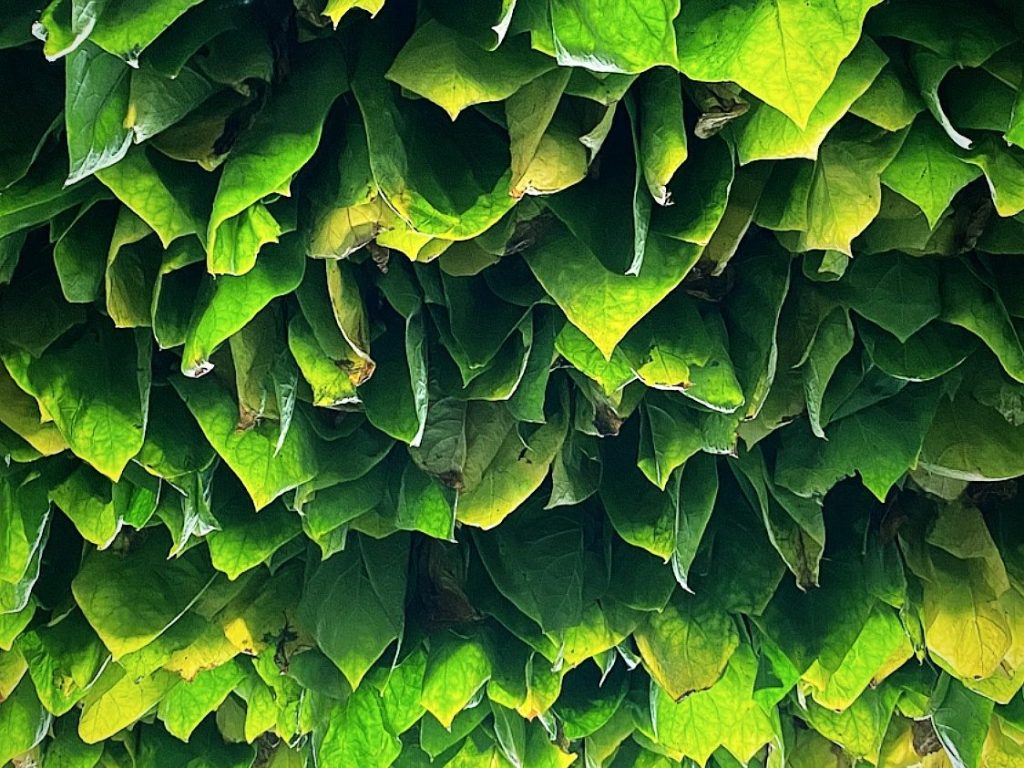
Binder, Wrapper, and Seed from Two Islands
Indonesia’s cigar tobacco comes mainly from two of its islands, Java and Sumatra. Both produce binder, wrapper, and filler leaf, and Sumatra gave its name to a thin wrapper and to the seed behind it. That seed now grows wrapper in Ecuador, Mexico, and Cameroon as well.
Most Indonesian leaf falls in the mild to medium range. Its flavor and aroma sit between Connecticut shade and Central African wrapper, with earthy, aromatic notes and a little sweet spice.
Where is Indonesian cigar tobacco grown?
Indonesia is an archipelago, but its cigar leaf comes from a few specific places. One of the most important is the eastern end of Java, around the city of Jember.
Two other areas add to the picture. In Central Java, the old Vorstenlanden estates around Klaten, between Yogyakarta and Solo, grow cigar leaf. On the northeast coast of Sumatra, near the city of Medan, the Deli district still grows its leaf for cigar makers abroad.
Besuki, Vorstenlanden, and Deli
Besuki, East Java
Besuki leaf is grown mainly around Jember, in the area once covered by the Dutch administrative region of Besuki. The crop is dark air-cured, meaning it is cured in barns by air rather than in heated kilns.
Besuki comes as an early crop and a late crop, known by their Dutch names, Voor-Oogst and Na-Oogst. Cigar leaf is often sold as Besuki Na-Oogst, or Besuki NO. It has been used as wrapper, binder, and filler.
Besuki TBN is a separate leaf. It is a shade-grown wrapper, a cross of Besuki and Connecticut shade.
Vorstenlanden, Central Java
Vorstenlanden means “princely lands” in Dutch, the name for the princely states around Yogyakarta and Surakarta, also called Solo. Klaten, between the two cities, dries its leaf in huge bamboo barns, some about 100 meters (330 feet) long.
A hand-rolled cigar factory has operated in Yogyakarta since 1918, and most of its workers are women.
Deli, Sumatra
Deli is the district around Medan where the Sumatra wrapper began. The old Dutch estates were nationalized in 1958, and Deli leaf is now grown on a smaller scale by a state-owned company.
The name Sumatra now covers two things: leaf grown on the island, and wrapper grown elsewhere from Sumatra seed, as in Ecuador and Mexico.
What does Indonesia grow tobacco for?
Indonesia is a major tobacco producer, and most of its crop is grown for cigarettes, above all kretek, a cigarette that blends tobacco with cloves. Kretek was first made in Kudus, in Central Java, in the late 1800s.
Cigar leaf makes up a smaller share of the harvest, and much of it is exported to cigar makers in Europe, the Americas, and Asia.
Leaf is bought mainly through merchants and village dealers, and some merchants work with contracted farmers.
How Indonesian leaf is used in a blend
The binder is the leaf under the wrapper that holds the filler together, so it matters more for construction and burn than for flavor. Indonesian leaf is a regular choice for that job. It burns slowly, and the burn line stays level across the foot of the cigar.
Indonesian binder goes into a lot of our blends, paired with Nicaraguan filler and a range of wrappers. We have also used Indonesian leaf as wrapper.
Our master blender, Steven Hernandez, travels to Indonesia about once a year to work directly with farmers and suppliers. Because leaf there is bought through merchants, dealers, and farmers, in-person relationships matter.
Indonesia in brief
Indonesia is the world’s largest archipelagic country, with more than 13,000 islands between the Indian and Pacific oceans. More than 280 million people live there, and more than half of them live on Java, which covers less than 7 percent of the land.
The national language is Indonesian, a standard form of Malay, and the country has more than 700 local languages.
Spices shaped its history. The Maluku islands, known as the Spice Islands, supplied cloves, nutmeg, and mace, and the Dutch East India Company took over the trade, capturing Jayakarta, now Jakarta, in 1619. Dutch control spread across the islands over the next three centuries.
Japan occupied the colony in 1942. Indonesia declared independence on August 17, 1945, and the Netherlands transferred sovereignty on December 27, 1949.
A short history of Indonesian cigar tobacco
Tobacco has been grown on Java and Sumatra for hundreds of years, but cigar leaf became a major export during the Dutch colonial period.
The turning point came on Sumatra’s east coast. In 1863, a Dutch planter named Jacobus Nienhuys received a large concession of land along the Deli River from the Sultan of Deli, and his first crop produced high-quality cigar wrapper. The Deli Company followed in 1869 and set up its headquarters in Medan. It grew quickly and came to control the area’s tobacco exports.
Deli leaf was thin, with a small central vein, so more of each leaf could be used to wrap cigars. Medan, then a village, grew into a major city on the tobacco trade.
Java followed a similar path. In the early 1900s, Besuki and Jember supplied cigar leaf to European markets.
The boom faded after the 1920s. Cigar smoking declined as cigarettes took over in major markets, the Great Depression cut sales further, and the Japanese occupation halted exports during the 1940s. Cigar leaf production declined after independence, and in 1958 the government nationalized the Dutch-owned tobacco estates.
Food and culture in the tobacco regions
Almost every Indonesian meal comes with sambal, a chili condiment that exists in about 300 regional varieties. In 2018, the government named five national dishes: soto, rendang, satay, nasi goreng, and gado-gado. Tempeh, the fermented soybean cake, is a Javanese invention.
East Java
Jember is known for the Jember Fashion Carnaval, an annual carnival of extravagant costumes.
Next door, Bondowoso is nicknamed the “tape city” for tape, a dessert of fermented cassava wrapped in banana leaves. Kawah Ijen, a turquoise, acidic crater lake on the border of Bondowoso and Banyuwangi, is reached by hiking.
In Banyuwangi, botok tawon, steamed bee larvae in banana leaf, is a local specialty. Pecel lele, fried catfish with sambal, is a favorite across East Java.
Central Java
Gudeg, from Yogyakarta, is young jackfruit stewed for hours with palm sugar and coconut milk. Teak leaves turn it reddish-brown, and it is usually served with rice, often with egg and chicken.
Klaten lies between Yogyakarta and Solo, and parts of the Prambanan temple compounds, a UNESCO World Heritage Site, are inside the regency. Part of Mount Merapi, Indonesia’s most active volcano, lies there too.
Batik, the hand-dyed cloth made with hot wax, joined UNESCO’s intangible heritage list in 2009, and gamelan, the traditional percussion orchestra, followed in 2021. Batik is also an essential part of royal dress at the Javanese courts.
Medan and North Sumatra
Medan is the largest city in Indonesia outside Java. Batak and Javanese communities are the largest, alongside Malay and Chinese ones.
Soto Medan is a rich stew of mixed meats in coconut milk, served with rice. Bika ambon is a popular cake flavored with pandan.
Batak cooking, from the Lake Toba region, includes roast pork and freshwater fish. The Maimun Palace, finished in 1888 by Sultan Ma’mun of Deli, still stands in the city.
Where It Fits
- Binder: Indonesian leaf, valued for a slow, level burn
- Wrapper: Indonesian leaf, used in some blends
- Flavor: earthy and aromatic, with a little sweet spice
Where to Next
Tell Us About the Cigar You Want to Make
A 30-minute conversation is enough to scope your blend, your packaging, and your real timeline. No pressure, no deposit, just straight answers from the people who’ll actually make your cigars.
We answer every serious inquiry within one business day.