
Honduran Tobacco: Bold Leaf from Cuban Seed
Honduras grows full-flavored cigar tobacco from Cuban seed, most of it in one valley near the Nicaraguan border.
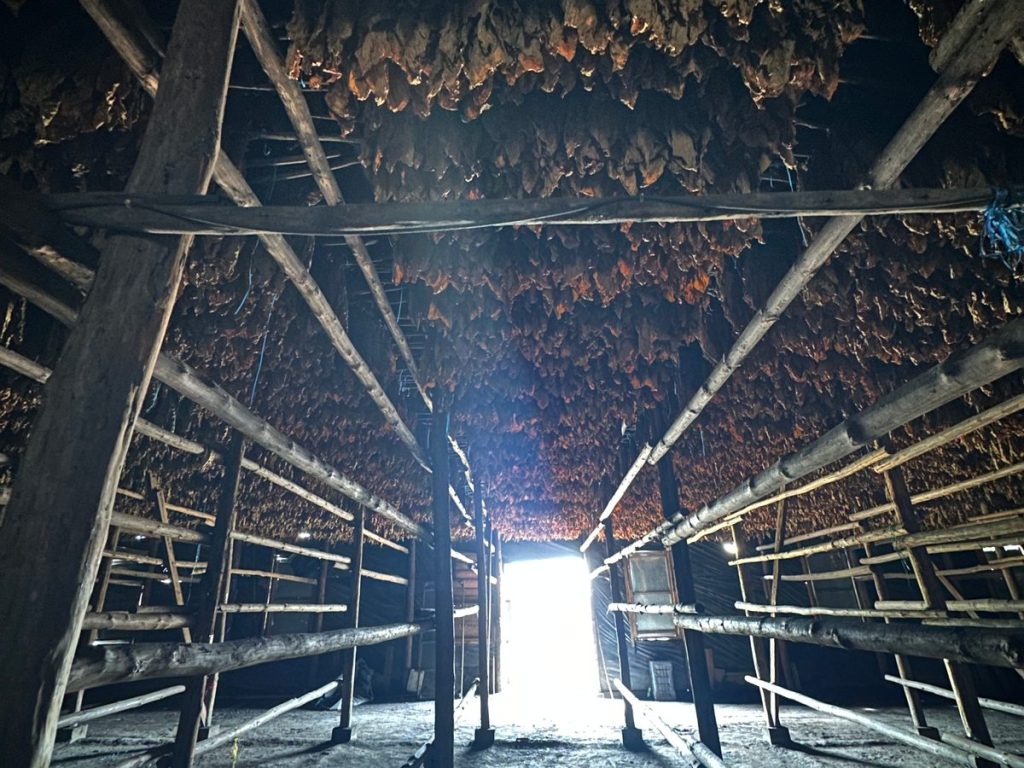
Full-Flavored Leaf from the Jamastrán Valley
The Jamastrán Valley, near the town of Danlí, grows most of Honduras’s cigar tobacco. The leaf tends to be full-flavored, with earthy, leathery, and spicy notes. Blenders use it mainly for filler and binder, and the valley also grows shade wrapper.
Where is Honduran cigar tobacco grown?
The Jamastrán Valley lies in the El Paraíso department of southern Honduras, close to the Nicaraguan border. The nearby town of Danlí, at 814 meters (2,670 feet), is about 135 kilometers (84 miles) by road from Estelí, Nicaragua.
Other growing areas include the Talanga Valley, in the center of the country, about two hours’ drive from Jamastrán. It is windy, so growers shelter sun-grown leaf with tents and rows of grass. Copán, in the west near the Guatemalan border, is the country’s historic tobacco area, centered on the highland city of Santa Rosa de Copán.
How Honduras became a cigar tobacco country
Tobacco has deep roots in western Honduras. In the 1700s, the Spanish crown set up a royal tobacco factory at Santa Rosa de Copán.
Honduras’s modern cigar tobacco came with Cuban exiles. After the 1959 revolution, growers left Cuba in search of land that could grow tobacco like Pinar del Río, Cuba’s main tobacco region. They were arriving in Honduras by the 1960s, and the Jamastrán Valley ranked near the top of the places they found.
In the late 1970s, political unrest in Nicaragua sent more tobacco growers across the border. Blue mold devastated the crop in the 1980s, but growers recovered. In 1998, Hurricane Mitch swept soil off tobacco fields and crushed curing barns across Central America, and growers rebuilt once more.
The seeds behind the leaf
Cuban seed supplies most of Honduras’s cigar crop. Wrapper leaf grows under shade, while filler grows in full sun.
Corojo and Criollo
Corojo is the best-known Cuban-seed variety. It was first developed in Cuba in the 1930s and is no longer grown there, but it is still grown under shade in the Jamastrán Valley for wrapper. Criollo, another Cuban-seed variety, is also grown in Honduras.
Connecticut shade
Connecticut-seed wrapper grows under shade in Jamastrán too and is sometimes called “Honduran shade.” The variety is known for a golden-brown color and a mild flavor.
What does Honduran tobacco taste like?
Honduran leaf is best known for full flavor. Corojo tends to be earthy, leathery, and spicy, and cigars built on it usually land between medium and full in strength. Connecticut-seed wrapper is the milder choice.
Seed, curing, and the rest of the blend all shape the result, so strength varies from cigar to cigar.
How blenders use Honduran leaf
Blenders often combine Honduran filler and binder with tobacco from other countries, such as Nicaraguan filler or a wrapper from Ecuador or Mexico, to balance strength, flavor, and appearance.
Some growers farm on both sides of the border, and Honduran leaf is also sold to cigar factories in Nicaragua and the Dominican Republic.
Beyond tobacco
Honduras has more than 10 million people, and its capital is Tegucigalpa. The interior is mostly mountains, with a Caribbean coast in the north and a Pacific coast on the Gulf of Fonseca in the south. Coffee is one of the country’s leading exports, and Danlí celebrates coffee and cigars together at its annual Festival del Puro y del Café.
In the same western department as Santa Rosa de Copán, the Maya city of Copán has been a UNESCO World Heritage site since 1980.
Where It Fits
- Filler: sun-grown, Cuban-seed leaf that adds strength and depth
- Binder: Cuban-seed leaf grown alongside the filler
- Wrapper: Corojo for spice, Connecticut-seed shade for a lighter touch
Where to Next
Tell Us About the Cigar You Want to Make
A 30-minute conversation is enough to scope your blend, your packaging, and your real timeline. No pressure, no deposit, just straight answers from the people who’ll actually make your cigars.
We answer every serious inquiry within one business day.